Crochet for Kids: How to Teach Children to Crochet
An age-by-age guide to teaching children crochet with safe tools, realistic expectations, simple first projects and encouraging lessons.
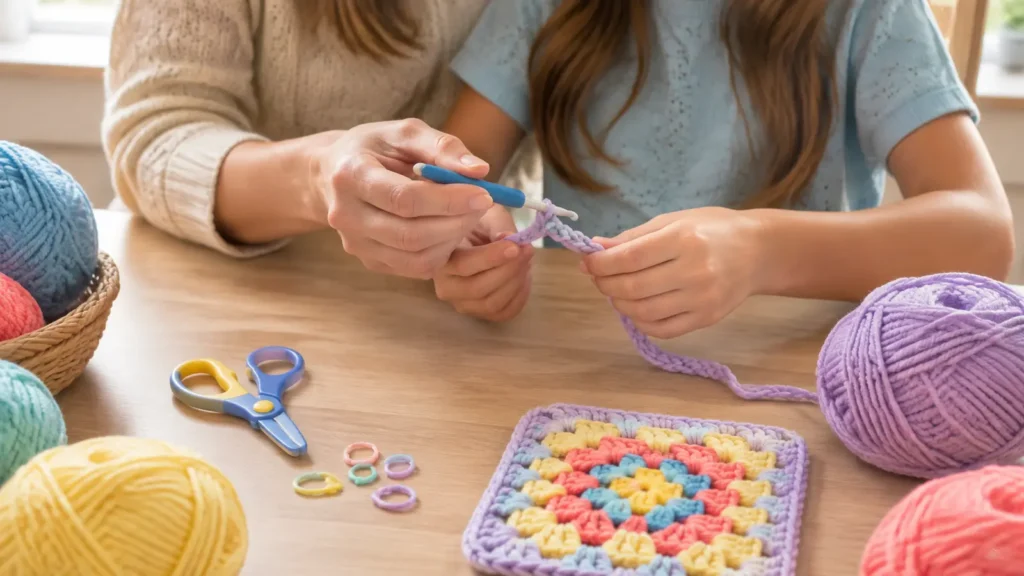
Teaching a child to crochet is one of the greatest gifts you can give them — patience, creativity, fine motor skills, and a superpower that lasts a lifetime. Here’s exactly how to do it, step by step, age by age. 🎉
Why Teach Kids to Crochet?
Before we get into the how, let’s talk about the why — because this is genuinely important, and not just because it’s adorable to watch a 7-year-old make their first wonky chain.
Brain Development
Crochet builds bilateral coordination, spatial reasoning, and pattern recognition — all critical cognitive skills.
Fine Motor Skills
The precise movements strengthen hand muscles and improve dexterity — great for writing, art, and instruments.
Emotional Regulation
Repetitive stitching is calming and meditative. Kids with anxiety or ADHD often benefit enormously.
Confidence Building
Finishing a project gives kids a tangible “I made this!” that no screen-based activity can replicate.
Screen Alternative
Gives kids a creative offline activity they’ll actually CHOOSE to do over scrolling — if introduced well.
Generational Bond
Learning from a parent or grandparent creates memories and traditions that last decades.
Age-by-Age Teaching Guide
Children develop at different rates, but here’s a general roadmap that works for most kids. Always follow the individual child — some 5-year-olds outperform some 8-year-olds. Encouragement > perfection, always.
🌟 The Pre-Crochet Stage: Foundation Fun
Getting hands ready for the real thing
True crochet requires fine motor control that most 5-6 year olds are still developing. But that doesn’t mean they’re too young to START. This age is all about building the physical and conceptual groundwork through playful activities.
⏱️ Session length: 10–15 min
🧶 Hook size: 9mm+ (very chunky)
What to Do at This Stage:
- Finger crochet: Use chunky yarn and literally just fingers instead of a hook. Loop through, pull through — same concept!
- Yarn weaving: Create a simple cardboard loom and weave yarn through. Develops the over-under rhythm of crochet.
- Chain practice only: Show them just the chain stitch with a big plastic hook (10mm+) and thick yarn. Making a “yarn necklace” chain is motivating!
- Yarn play: Let them explore yarn textures, colors, and wrapping — no rules, just tactile exploration.
Use only plastic hooks at this age — never metal or pointed hooks. Supervision is essential for every session. Keep sessions very short and end on a positive note, always.
🌸 First Stitches: The Magic Begins
Most kids are ready for real crochet now!
This is the sweet spot for learning. Most 7-8 year olds have enough fine motor control, attention span, and ability to follow multi-step instructions to actually CROCHET. Expect it to click for some kids immediately — and take weeks for others. Both are completely normal.
⏱️ Session length: 20–30 min
🧶 Hook size: 6-7mm
Teaching Sequence:
- The Slip Knot: Call it “making a lasso” — kids love that. Show it as a magic trick first.
- The Chain Stitch: Practice JUST chaining until they can do it independently. Make a “yarn snake”!
- Turning the Work: This is often the first confusing moment. Be patient and use sticker markers.
- Single Crochet: “Insert, wrap, pull through, wrap, pull through.” Make it into a little chant!
- First Project: A small flat rectangle — bookmark, miniature scarf for a stuffed animal, or a simple potholder.
Call it “the crochet code” — each stitch is a “move” in a game. Insert is “dive in,” yarn over is “grab the rope,” pull through is “escape!” Kids who respond to game metaphors learn this FAST.
🚀 Level Up: More Stitches, Real Projects
Independence and creativity emerge
By 9-11, children who have been introduced to crochet can often read simple patterns, work multiple stitches, and even troubleshoot their own mistakes. This age group can start making projects they’re genuinely PROUD of. Let them choose what they make — autonomy is everything at this stage.
⏱️ Session: 30–45 min
📖 Can read: Simple patterns
Great Projects for This Age:
-
Crochet Scrunchies — Fast, trendy, and they can make 10 for friends. Instant popularity boost!
-
Simple Amigurumi — A basic round ball or small character. Stuffing it is the most satisfying part.
-
Mini Drawstring Bag — Functional and achievable. Great for keeping their own craft supplies in!
-
Bookmark or Keychain — Quick finish, immediate reward, and they’ll USE it every day.
⭐ Advanced Young Maker: Sky’s the Limit
Adult patterns are within reach!
Teens who crochet are honestly inspiring. By 12+, many young crafters can tackle complex patterns, learn new techniques independently via YouTube, and even design their own patterns. Some start their own small businesses at this age — and they’re wonderful at it.
📖 Reads complex patterns
💡 May self-teach new skills
What Motivates Teen Crocheters:
- Trendy patterns: “Cottagecore” aesthetics, frog bags, granny square cardigans — they know what’s cool!
- Selling their work: Help them set up an Etsy shop or sell at a school fair. Entrepreneurial pride is powerful.
- Crochet communities: Online spaces like Ravelry, TikTok crochet community (#crochetok), and Discord servers.
- Custom gifts: Making personalized items for friends deepens both the friendship AND the craft.
Golden Rules for Teaching Kids to Crochet
Keep Sessions Short
End while they’re still enjoying it — NOT when they’re frustrated. Always leave them wanting more.
Let Them Choose Colors
Ownership of their project starts with picking the yarn. Never override their color choices.
Celebrate the “Wonky”
A lopsided square is a PERFECT first project. Frame it. Celebrate it. Put it on the fridge.
Never Grab the Hook
Resist the urge to “fix” by taking over. Guide verbally or demonstrate on a separate piece instead.
Use YouTube Together
Kids respond well to video tutorials. Finding a young crocheter on YouTube to follow can be very motivating.
Create a Stash Corner
Give them their own dedicated hook case and yarn basket. Having “their own” supplies is incredibly motivating.
Start a crochet journal together! Each project gets a page: photo, yarn used, date started, date finished, and how they felt making it. In 5 years, this journal will be one of their most treasured possessions — and yours.
What to Do When They Get Frustrated
Frustration is NORMAL and actually important. It means they care. Here’s how to handle it without crushing the enthusiasm:
- Normalize it first. “Even I get frustrated sometimes! It’s part of learning.” (This is gold.)
- Take a snack break. Food and a 10-minute rest reset everything.
- Simplify. Drop back to a stitch they can already do confidently. Rebuild the positive feeling.
- Try a different approach. If verbal explanation isn’t working, try YouTube. If right-hand hold isn’t working, try left-handed. If sitting is frustrating, try lying on the floor. Be creative.
- Know when to stop for the day. Pushing through tears creates negative associations. The hook will be there tomorrow.
The Greatest Gift
Years from now, that child won’t remember the specific pattern they learned first, or whether their tension was perfect. What they’ll remember is sitting next to you, yarn in hand, feeling trusted and capable and creative. They’ll remember that YOU believed they could do it.
And one day — maybe when they’re teaching THEIR child to crochet — they’ll think of you. That’s the real project you’re making. 💕
🌈 Start Your Child’s Crochet Journey Today!
Find beginner-friendly free patterns and tutorials on Crochelly — perfect for young makers and their grown-ups! 🧶💕