The Ultimate Guide to Choosing the Right Yarn for Your Project
Choose the best yarn for any crochet project by understanding fiber, weight, texture, care requirements, cost and the needs of the finished item.
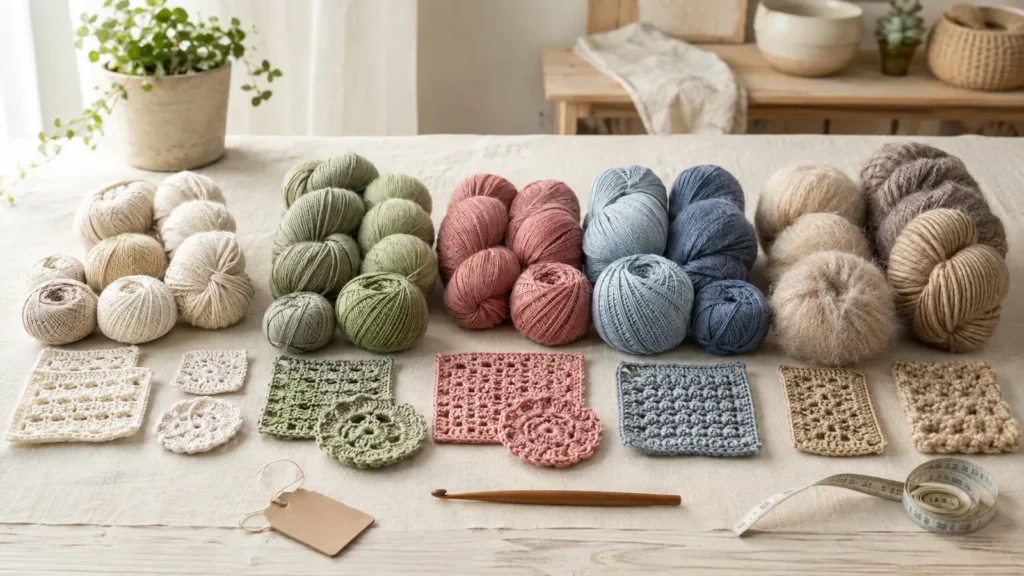
Standing in the yarn aisle feeling completely overwhelmed? Cotton or acrylic? Worsted or DK? What even IS “superwash merino”? Don’t panic. This guide will turn you from a confused yarn shopper into a confident fiber connoisseur. Let’s decode the yarn universe together! 🌈
First Things First: How to Read a Yarn Label
That little paper band wrapped around your yarn skein? It’s basically a cheat sheet packed with everything you need to know. Here’s what to look for:
- Fiber Content: What the yarn is made of (cotton, acrylic, wool, etc.)
- Weight/Thickness: How thick the yarn is (lace, fingering, DK, worsted, bulky, etc.)
- Recommended Hook/Needle Size: The starting point for your gauge
- Yardage/Meterage: How much yarn is in the skein
- Dye Lot: The specific dye batch — ALWAYS buy enough of the same dye lot!
- Care Instructions: Can you machine wash it? Will it survive the dryer?
Always buy all the yarn you need for a project from the SAME dye lot. Even if two skeins look identical in the store, different dye lots can show subtle color differences once crocheted. Trust us — finding out mid-blanket that your “matching” pink is slightly off is heartbreaking.
Yarn Fiber Types: The Big Breakdown
Let’s meet the main players in the yarn world:
The OG of yarn fibers. Warm, elastic, forgiving of uneven stitches, and absolutely gorgeous. Wool has a natural “memory” that helps your stitches stay even and your finished pieces hold their shape beautifully.
Pros
- Warm and insulating
- Great stitch definition
- Elastic and forgiving
- Naturally moisture-wicking
Cons
- Can felt if machine washed
- Some people are allergic
- Moths love it
- Can be pricey
Best for: Sweaters, hats, scarves, mittens, blankets — anything cozy and warm!
Crisp, cool, and beautifully structured. Cotton yarn creates clean, defined stitches and is perfect for warm-weather projects. It’s also hypoallergenic, making it great for baby items and people with sensitive skin.
Pros
- Machine washable
- Hypoallergenic
- Cool to wear
- Excellent stitch definition
Cons
- No stretch/elasticity
- Can be hard on hands
- Heavy when wet
- May stretch out over time
Best for: Dishcloths, summer tops, market bags, amigurumi, home décor!
The workhorse of the yarn world! Affordable, widely available, machine washable, and comes in every color imaginable. Acrylic gets a bad rap from yarn snobs, but modern acrylics can be surprisingly soft and beautiful.
Pros
- Very affordable
- Machine wash & dry
- Huge color range
- Hypoallergenic
Cons
- Can pill over time
- Not breathable
- Can feel “squeaky”
- Less eco-friendly
Best for: Blankets, amigurumi, beginner projects, items that need frequent washing!
Silky, drapey, and eco-friendly — bamboo yarn feels luxurious and has a beautiful sheen. It’s perfect for lightweight garments and accessories that need elegant drape.
Pros
- Silky soft feel
- Beautiful drape
- Naturally antibacterial
- Eco-friendly option
Cons
- Can be slippery
- Splits easily
- Less structure
- Can stretch
Best for: Summer shawls, lightweight tops, baby items, drapey scarves!
Yarn Weight Chart: Your Quick Reference
Yarn “weight” doesn’t mean how heavy it is — it refers to the thickness of the strand. Here’s the standard system:
| Weight # | Name | Hook Size | Best For |
|---|---|---|---|
| 0 | Lace | 1.5–2.25mm | Doilies, lace shawls |
| 1 | Fingering/Sock | 2.25–3.5mm | Socks, lightweight shawls |
| 2 | Sport | 3.5–4.5mm | Baby items, light garments |
| 3 | DK (Double Knit) | 4.5–5.5mm | Garments, accessories |
| 4 | Worsted/Aran | 5.5–6.5mm | Blankets, hats, sweaters |
| 5 | Bulky/Chunky | 6.5–9mm | Quick blankets, cowls |
| 6 | Super Bulky | 9–16mm | Arm knitting, thick blankets |
Matching Yarn to Your Project: The Cheat Sheet
Here’s our quick recommendation guide based on what you’re making:
Baby Items
Soft acrylic or cotton blend, DK weight, machine washable
Amigurumi
Cotton or acrylic, worsted weight, tight gauge for stuffing
Scarves & Shawls
Wool, alpaca, or bamboo blend, any weight for desired drape
Home Décor
Cotton for dishcloths, acrylic for blankets, macramé cord for baskets
Garments
Wool or cotton blend, DK to worsted, check drape and breathability
Gifts
Machine-washable anything! Recipients rarely hand-wash
5 Golden Rules of Yarn Shopping
Before you head to the store (or open that online cart), remember these:
- Rule 1: Always buy more than you think you need. Running out mid-project with a discontinued dye lot is a nightmare.
- Rule 2: Touch before you buy (if possible). How yarn feels in the skein is how it’ll feel against skin.
- Rule 3: Consider the recipient’s lifestyle. Making a gift for someone who hates hand-washing? Skip the delicate wool.
- Rule 4: Think about the project’s life. A baby blanket needs to survive a washing machine. A decorative wall hanging doesn’t.
- Rule 5: Your stash is never too big. That’s not hoarding. That’s “creative inventory management.” 😉
Not sure if yarn is natural or synthetic? (Maybe you lost the label.) Try the burn test: snip a small piece and carefully hold a flame to it. Natural fibers (wool, cotton) smell like burning hair or paper and turn to ash. Synthetics (acrylic, polyester) melt into a hard bead and smell like chemicals. Always do this safely in a ventilated area!
Final Thoughts: Trust Your Hands
At the end of the day, the “right” yarn is the one that makes you excited to pick up your hook. Trust your fingers — if a yarn feels good in your hands and looks beautiful to your eyes, it’s probably the right choice. Rules are guidelines, not laws.
Your yarn stash is a reflection of your creative personality. Build it with joy, use it with confidence, and never apologize for buying “just one more skein.” We’ve all been there. We’re all still there. And that’s perfectly wonderful. 🌈🧶
📌 Save This Guide!
Bookmark this page for your next yarn shopping trip. Your future self will thank you! And explore more helpful guides on Crochelly. 💜