Crochet Hook Types Explained: Which Hook Is Right for You?
Compare crochet hook materials, styles, grips and sizes so you can choose a comfortable hook that suits your yarn, project and technique.
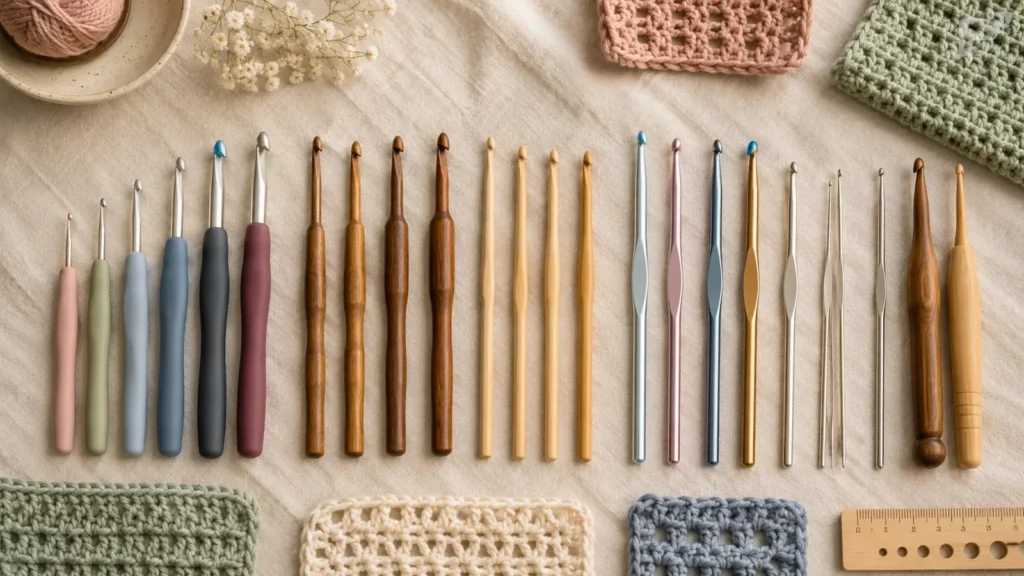
Walk into any craft store and the hook wall is OVERWHELMING. Aluminum, bamboo, ergonomic, steel, Tunisian, interchangeable… what does it all MEAN? Today we demystify every single hook type so you can shop with total confidence. 🛒✨
Why Your Hook Choice Actually Matters
A crochet hook isn’t just a stick with a curved end. The material, handle shape, head style, and throat design all affect how your stitches form, how your hands feel after an hour of work, and even how consistent your tension is. Choosing the wrong hook for your project or yarn type can make everything harder than it needs to be.
The good news? Once you understand what each type does, picking the right hook becomes completely intuitive. Let’s break it all down.
The hook that feels best in YOUR hand is ultimately the right hook. This guide gives you the knowledge to experiment intelligently — not a one-size-fits-all prescription.
The 6 Main Hook Types
All Levels
Aluminum Hooks
The most popular all-rounder. Smooth surface allows yarn to glide quickly. Lightweight, affordable, widely available. Great for acrylic and wool yarns. The classic choice that never lets you down.
Beginner Friendly
Bamboo / Wood Hooks
Slightly grippy surface slows the yarn down — perfect for beginners who need more control. Warm to the touch, eco-friendly, and incredibly beautiful. Slightly fragile in very small sizes.
All Levels
Ergonomic Hooks
Soft rubber or foam handle that’s wider and shaped to reduce hand fatigue. Life-changing if you crochet for hours or have arthritis, carpal tunnel, or joint pain. Worth every penny.
Advanced
Steel Hooks
Tiny, thin, and precise. Used exclusively for thread crochet — doilies, lace, intricate motifs. Sized differently (higher number = smaller size). Not for yarn!
Specialty
Tunisian / Afghan Hooks
Extra-long with a stopper at the end. Holds many stitches at once to create the unique Tunisian stitch fabric. Also available as flexible double-ended hooks for wide blankets.
Beginner Friendly
Plastic Hooks
Lightweight and very affordable. The go-to for super bulky yarns and jumbo projects since they come in large sizes. Fun colors make them easy to spot in your project bag!
Anatomy of a Crochet Hook
Every hook has the same five parts, and understanding them helps you pick the right one:
- The Point / Tip: How sharp or rounded the end is. Sharper tips (like Clover Amour) are great for tight stitches. Rounded tips are gentler on fuzzy or delicate yarns.
- The Throat: The curved notch that catches the yarn. “Inline” throats (like Susan Bates) are more pronounced and create a more uniform stitch. “Tapered” throats (like Boye) are smoother and allow faster work.
- The Shaft / Shank: The cylindrical part that determines your stitch size. Keep this in mind — the shaft, not the throat, gives the stitch its size.
- The Thumb Rest: The flattened area where your thumb and forefinger grip. Ergonomic hooks replace this with a padded handle.
- The Handle: The long end. Length and material vary widely. Personal preference rules here!
The great Boye vs. Susan Bates debate! These are the two most common inline vs. tapered throat styles. Many crocheters have strong opinions — the best way to decide is to try both with the same yarn and see which feels more natural to your technique.
Hook Size Guide: US vs. Metric
Hook sizing is confusing because the US uses letter/number labels AND metric sizing exists. Here’s your complete reference:
| US Size | Metric (mm) | Best Yarn Weight | Common Uses |
|---|---|---|---|
| B-1 | 2.25mm | Lace / Fingering | Delicate shawls, socks |
| C-2 | 2.75mm | Fingering / Sport | Baby items, fine lace |
| D-3 | 3.25mm | Sport | Lightweight garments |
| E-4 | 3.5mm | Sport / DK | Amigurumi, baby clothes |
| F-5 | 3.75mm | DK | Dishcloths, small items |
| G-6 | 4.0mm | DK / Worsted | Garments, accessories |
| H-8 | 5.0mm | Worsted | Hats, scarves, blankets |
| I-9 | 5.5mm | Worsted / Aran | Sweaters, bags |
| J-10 | 6.0mm | Bulky | Chunky hats, cowls |
| K-10.5 | 6.5mm | Bulky | Quick blankets, baskets |
| L-11 | 8.0mm | Super Bulky | Thick blankets, rugs |
| M/N-13 | 9.0mm | Super Bulky | Jumbo projects |
| P-16 | 11.5mm | Jumbo | Arm crochet, giant scarves |
US size numbers are NOT consistent across brands. Always check the millimeter measurement — that’s the universal standard. A “J” hook from one brand might measure 6.0mm while another measures 6.5mm. When gauge matters (it always does for garments!), trust the mm.
Which Hook is Right FOR YOU? A Quick Quiz
🎯 Find Your Perfect Hook Match
Think about your crocheting situation and pick the description that fits best:
The Best Hook Brands Worth Your Money
- Clover Amour (Ergonomic): The gold standard of comfortable crochet. The soft grip handle is extraordinary. Worth the investment.
- Tulip Etimo Rose: The luxury ergonomic hook. Beautiful, precise, and a joy to use. Great gift for yourself or a crocheting friend.
- Susan Bates Silvalume: Brilliant aluminum inline hooks. Very affordable, very reliable. The classic choice.
- Furls Odyssey: Handcrafted swirl handles in gorgeous resin designs. These are the jewelry of the crochet world. A splurge, but stunning.
- Boye: Widely available, budget-friendly, and solid quality. A great starter set.
- ChiaoGoo: Exceptional for thread and fine yarn work. Professional quality.
Building Your Hook Collection Strategically
You don’t need every hook on day one. Here’s a sensible build-out plan:
- Start: One good aluminum or bamboo hook in 5.0mm (H-8). This covers most worsted weight projects.
- Month 2: Add a small set (C through J) in aluminum. Covers the most common yarn weights.
- Month 4: Pick up one ergonomic hook in your most-used size. Notice the difference immediately.
- Month 6+: Add specialty hooks based on what you’re making — steel for lace, Tunisian for textured blankets, jumbo plastic for chunky projects.
- Ongoing: Slowly upgrade to quality brands as your favorites wear out or as you find your preferences. Your hooks will outlast most things in your life!
Keep your hooks in a roll-up case or pencil case organized by size. Label them with a marker if needed. Losing your 5.0mm in the middle of a project is a crisis nobody needs. 😅
The Bottom Line
Your hook is your most intimate tool — it spends hours in your hand, it shapes every stitch you make, and it directly affects how much you enjoy crocheting. It’s worth investing in understanding what you need and slowly building a collection that serves your craft.
But remember: the best crochet hook is the one you pick up and actually use. Don’t let hook paralysis stop you from making beautiful things. Grab what you have, start stitching, and upgrade as you go. Your future self will thank you — one stitch at a time. 🪝💜
🪝 Ready to Hook Up Your Dream Project?
Explore free patterns, beginner guides, and more on Crochelly. Your next favorite make is waiting! 💜✨