Crochet Sensory Items for Anxiety & Stress Relief: 15 Therapeutic Patterns and the Science Behind Why They Work
Explore 15 calming crochet sensory projects, material guidance, construction tips, and practical ways to use tactile handmade items for stress relief.
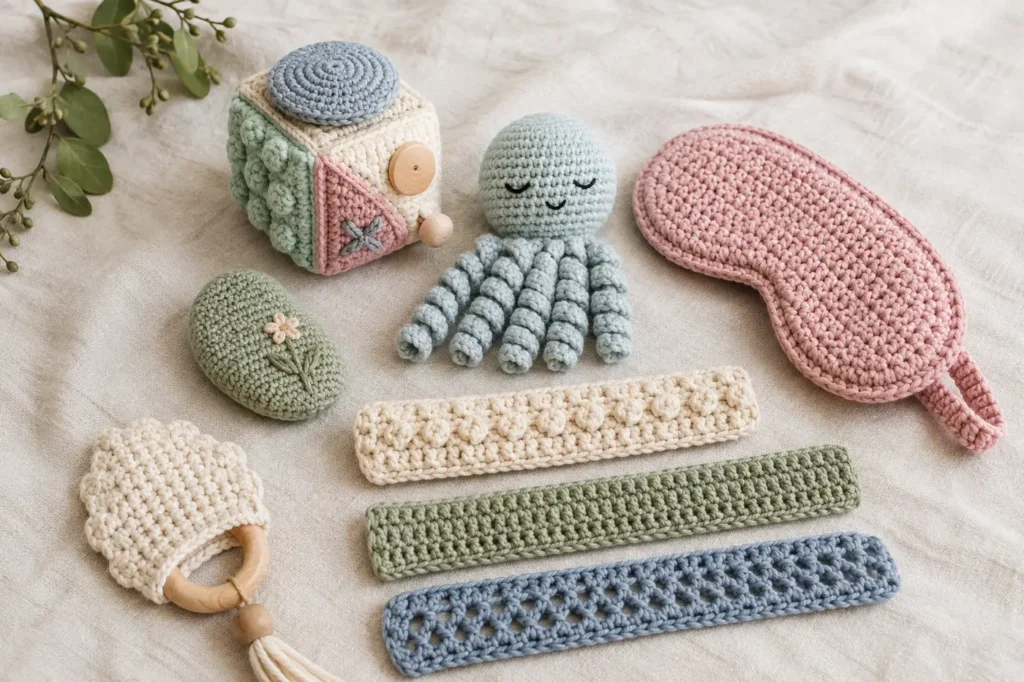
Crochet Sensory Items for Anxiety & Stress Relief: 15 Therapeutic Patterns and the Science Behind Why They Work (2026 Guide)
Published on Crochelly.com | Updated June 2026
In 2026, the conversation around mental health has never been more open — and the role of tactile, hands-on activities in managing stress, anxiety, ADHD, and sensory processing needs has moved firmly into the mainstream. Crochet itself is widely recognized as a meditative, therapeutic practice, but there’s a growing movement that takes this one step further: crocheting items specifically designed to provide sensory comfort and anxiety relief.
This isn’t just craft-world trend-chasing. There’s genuine science behind why textured, squeezable, weighted, and tactile objects help regulate our nervous systems. And as crocheters, we’re in a unique position — we get the double benefit of the calming process of making these items AND the therapeutic value of using them afterward.
In this comprehensive guide, we’ll explore the science of sensory regulation, break down 15 crochet projects designed specifically for anxiety and stress relief, and give you the knowledge to create personalized sensory tools for yourself, your children, your students, or your therapy clients.
Table of Contents
- The Science: Why Sensory Items Work for Anxiety
- Crochet as Therapy: What the Research Says in 2026
- Choosing the Right Yarn for Sensory Projects
- Category 1: Fidget & Tactile Items (5 Projects)
- Category 2: Weighted Comfort Items (4 Projects)
- Category 3: Breathing & Grounding Tools (3 Projects)
- Category 4: Sensory Wearables (3 Projects)
- Customizing Sensory Items for Different Needs
- Creating Sensory Items for Others: Best Practices
- Additional Resources
1. The Science: Why Sensory Items Work for Anxiety
Before we dive into patterns, it’s important to understand why sensory items are effective. This isn’t pseudoscience or placebo — there are well-documented neurological mechanisms at work.
The Nervous System Connection
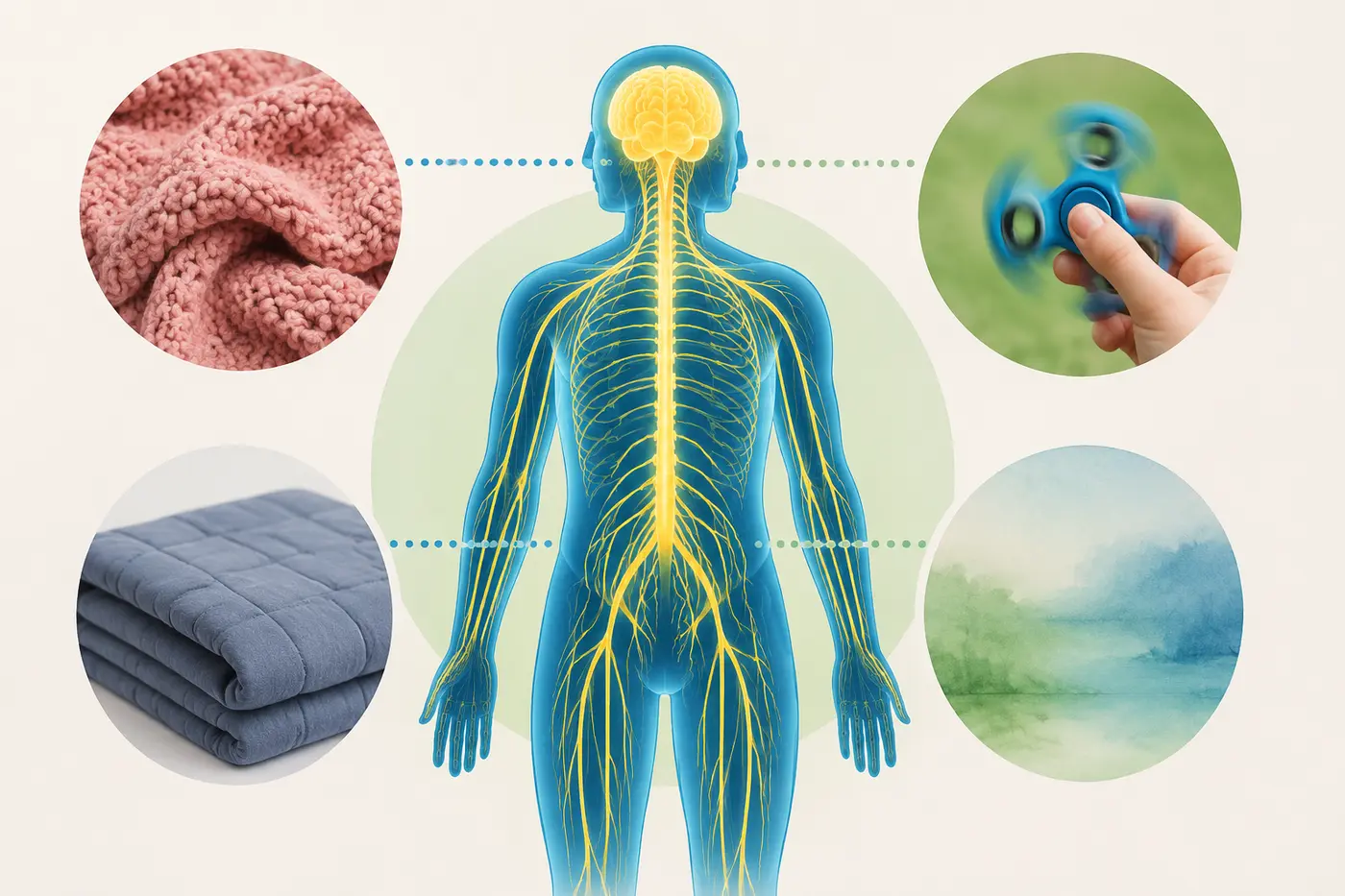
Our bodies have two main modes of operation controlled by the autonomic nervous system:
- Sympathetic Nervous System (“Fight or Flight”): Activated during stress, anxiety, or perceived danger. Heart rate increases, muscles tense, breathing becomes shallow, and our thinking brain takes a back seat to survival instincts.
- Parasympathetic Nervous System (“Rest and Digest”): The calm, regulated state where our body can heal, process emotions, think clearly, and feel safe.
Sensory items help shift us from sympathetic activation (anxiety) to parasympathetic calm through several mechanisms:
1. Tactile Grounding
When you touch a textured object — running your fingers over bumpy stitches, squeezing a soft ball, rubbing a smooth worry stone — your brain receives rich sensory input that competes with and interrupts anxious thought loops. This is based on the Gate Control Theory, which explains how physical sensations can “close the gate” on pain and anxiety signals.
2. Bilateral Stimulation
Many fidget activities involve repetitive, rhythmic movements (squeezing, rolling, flipping). This bilateral (two-sided) stimulation has been shown to activate both hemispheres of the brain and promote emotional processing and regulation — similar to the mechanism behind EMDR therapy.
3. Deep Pressure Stimulation
Weighted items (like weighted blankets, eye masks, and lap pads) provide deep pressure touch, which has been extensively studied. Research published in the Journal of Clinical Sleep Medicine and Occupational Therapy in Mental Health shows that deep pressure stimulation increases serotonin (the “feel-good” neurotransmitter) and decreases cortisol (the stress hormone), promoting a measurable calming effect.
4. Proprioceptive Input
Squeezing, pulling, and manipulating objects provides proprioceptive input — sensory information about body position and movement. This type of input is inherently organizing and calming to the nervous system, which is why occupational therapists frequently recommend fidget tools for children and adults with anxiety, ADHD, and autism.
5. Mindful Attention Anchoring
Sensory items give anxious minds something concrete and present-moment to focus on. Instead of spiraling into “what if” thoughts about the future, the brain anchors to the physical sensation of the object. This is essentially a portable mindfulness practice.
2. Crochet as Therapy: What the Research Says in 2026
The therapeutic benefits of crochet itself have been increasingly studied and validated in recent years. Here’s what the current research landscape looks like:
Key Findings
- A 2024 study published in the British Journal of Occupational Therapy found that regular crafting (including crochet) was associated with significantly lower levels of anxiety and depression, with 81% of participants reporting improved mood after crafting sessions.
- Research from the University of Wollongong (2023-2025) demonstrated that the repetitive, rhythmic motions of crochet activate the brain’s default mode network in a way similar to meditation, promoting a flow state that reduces rumination and anxious thinking.
- A meta-analysis published in 2025 in PLOS ONE examining 37 studies on textile crafts and mental health concluded that crochet and knitting provide “clinically meaningful” reductions in perceived stress, anxiety symptoms, and depression symptoms.
- Neuroimaging studies (2025-2026) have shown that the bilateral hand movements involved in crochet stimulate cross-hemispheric brain communication, which is associated with emotional regulation and reduced amygdala reactivity (the brain’s “fear center”).
The Double Benefit of Crocheting Sensory Items
When you crochet a sensory item, you get a compounded therapeutic effect:
- The act of crocheting provides immediate stress relief through rhythmic motion, creative engagement, and mindful attention.
- The finished product provides ongoing sensory comfort that you (or someone you gift it to) can use anytime, anywhere.
- The sense of purpose — knowing you’re making something meaningful and helpful — provides a cognitive boost and sense of accomplishment.
This is why the “therapeutic crochet” movement has gained so much traction in 2026. It’s not just about making pretty things — it’s about creating functional tools for mental wellness.
3. Choosing the Right Yarn for Sensory Projects
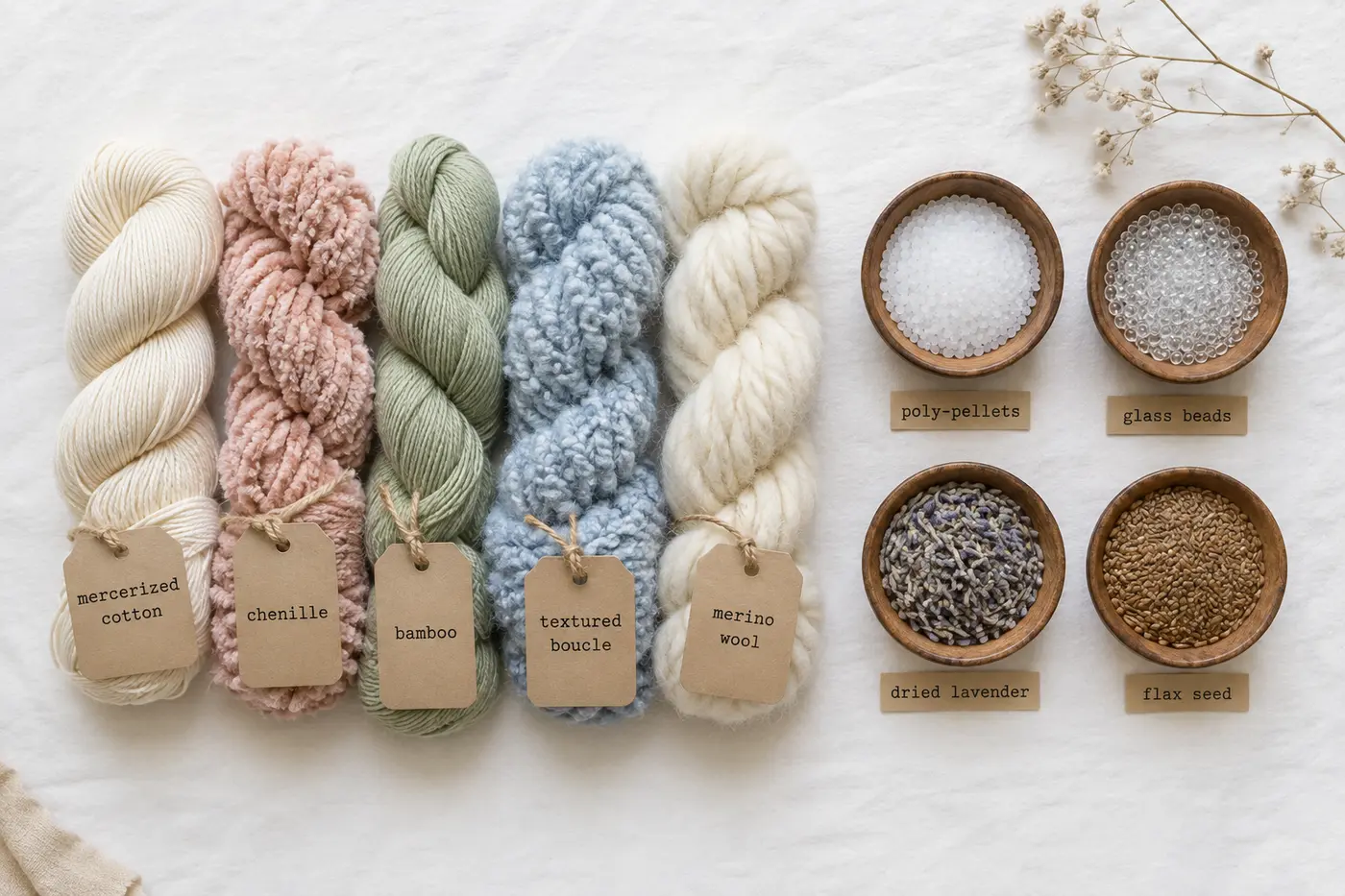
Yarn choice is especially critical for sensory items because the person using them will be touching the yarn repeatedly, often during vulnerable emotional moments. Here’s a detailed guide:
For Tactile/Fidget Items
| Yarn Type | Sensory Profile | Best For | Avoid If |
|---|---|---|---|
| Mercerized Cotton | Smooth, cool, slightly silky | People who prefer smooth textures | User needs warmth/softness |
| Chenille | Ultra-soft, velvety, plush | Comfort seekers, children | User is bothered by “too soft” textures |
| Textured/Boucle | Bumpy, irregular, stimulating | Tactile seekers, ADHD fidgeting | User is sensory-defensive |
| Bamboo | Silky-smooth, temperature-regulating | Warm-weather use, sensitive skin | Need for grippy texture |
| Acrylic (premium quality) | Soft, warm, consistent | Budget-friendly projects, washability | Eco-consciousness is priority |
| Wool (superwash merino) | Warm, springy, natural | Cold-weather items, weighted items | Wool sensitivity/allergy |
For Weighted Items
When crocheting weighted items, choose yarns that create a tight, dense fabric to prevent the filling from poking through. Cotton and cotton blends are ideal because they’re washable, durable, and create a firm fabric in single crochet.
Sensory-Safe Filling Materials
- Poly-pellets (plastic weighted beads): Best for washable weighted items. Consistent weight distribution.
- Glass beads: Heavier than poly-pellets, smooth and quiet. Great for eye masks and lap pads.
- Rice/flax seed: Natural, can be heated in microwave for warmth therapy. NOT washable — must use removable covers.
- Dried lavender: Add to filling for aromatherapy benefits. Combine with rice or flax seed.
- Polyester fiberfill: For soft, squeezable items (not weighted). Hypoallergenic and washable.
- Steel shot beads: Very heavy — use for items that need significant weight in a small size.
4. Category 1: Fidget & Tactile Items
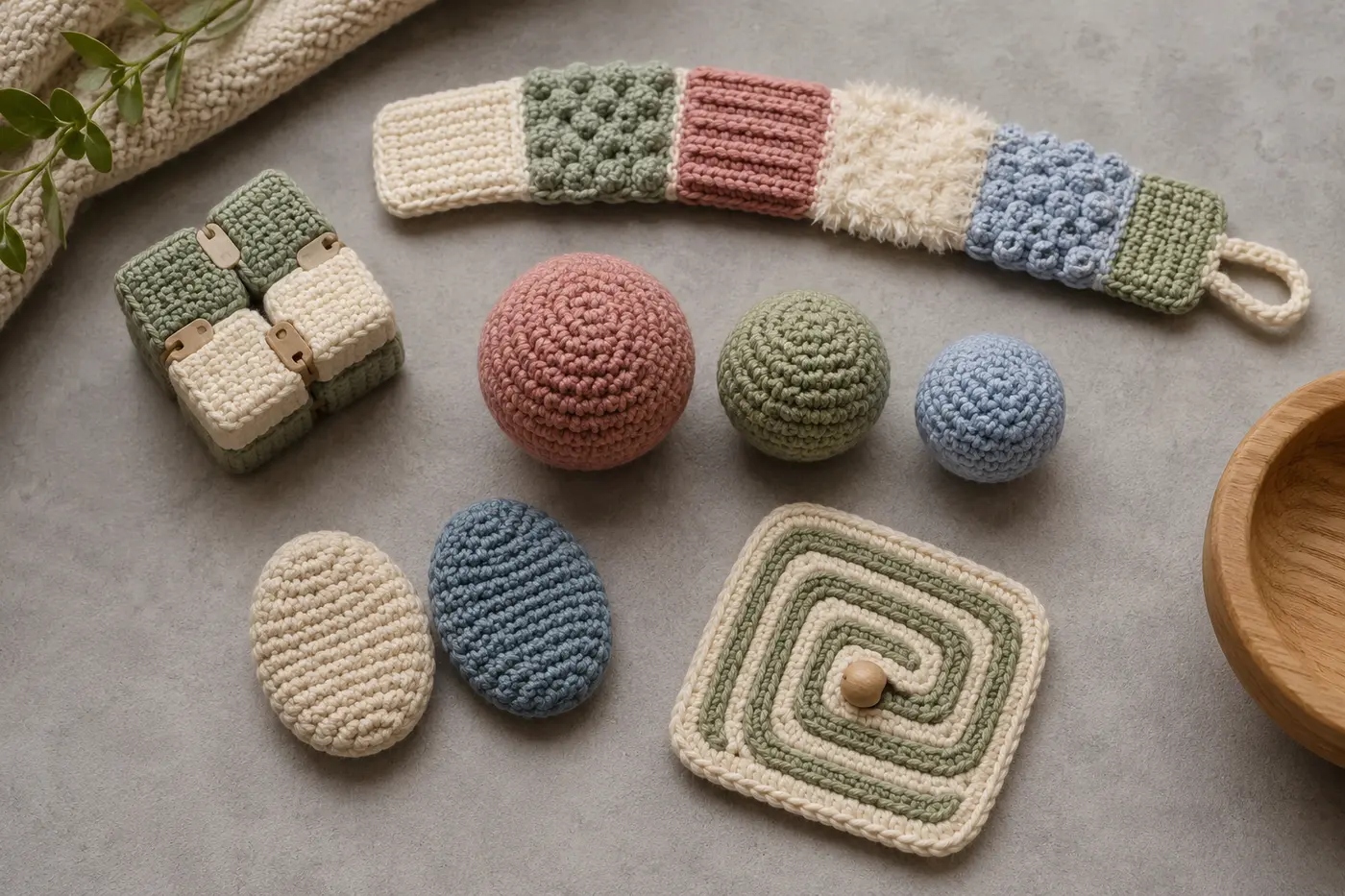
Project 1: The Infinity Fidget Cube
Difficulty: ⭐⭐⭐ (Intermediate) | Hook: 3.5mm | Yarn: Cotton or cotton blend
This is not your typical crocheted cube. Inspired by the popular infinity cube fidget toy, this crocheted version consists of 8 small cubes joined together with yarn hinges that allow the cube to fold and unfold infinitely. Each face of the cube can feature a different texture — smooth single crochet, bumpy bobble stitch, ribbed post stitches, and loop stitch — providing varied tactile input as the user fidgets.
How to construct:
- Crochet 8 small cubes (approximately 1.5 inches each), each made from 6 crocheted squares joined together and lightly stuffed.
- Each pair of cubes is connected at opposing edges with crocheted chain hinges.
- The 4 pairs are then connected to each other following the infinity cube joining pattern.
- When complete, the cube can be folded and flipped continuously with no “end” — providing endless, quiet fidgeting.
Therapeutic benefit: The folding motion provides bilateral stimulation and proprioceptive input. The varied textures on each face add tactile grounding. It’s completely silent (unlike clicking fidget toys), making it appropriate for classrooms, offices, and therapy sessions.
Project 2: Multi-Texture Sensory Strip
Difficulty: ⭐⭐ (Easy) | Hook: 4mm | Yarn: Multiple types
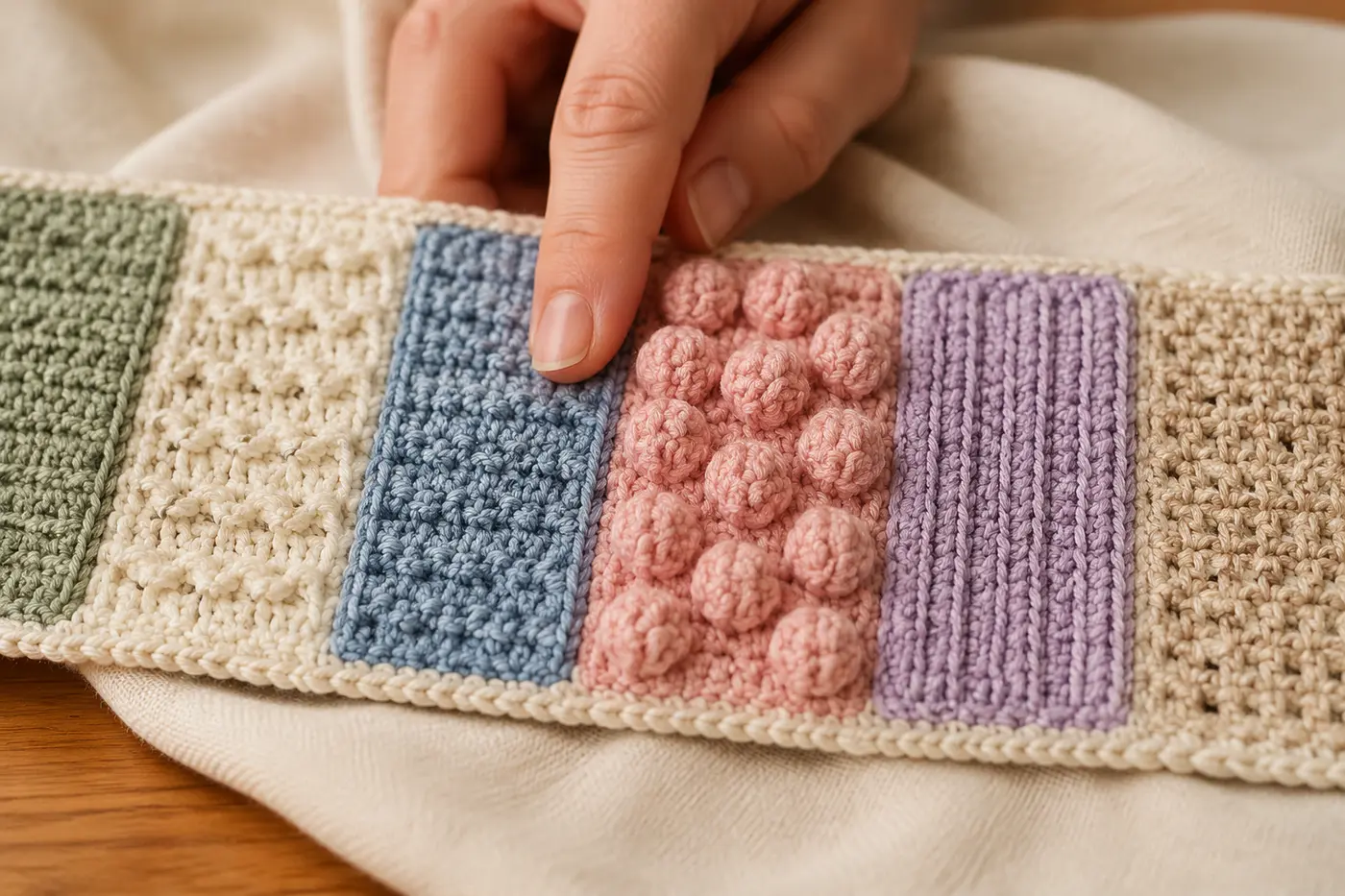
A sensory strip is a long, narrow rectangle (approximately 2 inches wide by 8-10 inches long) that features multiple different textures worked in sections. Think of it as a tactile sampler that fits in your pocket.
Suggested texture sections:
- Smooth single crochet in mercerized cotton (cool, flat, calming)
- Bobble stitch section in acrylic (bumpy, stimulating)
- Loop stitch section in chenille (soft, fuzzy, comforting)
- Front post/back post ribbing in wool (ridged, satisfying to run fingers over)
- Puff stitch section in cotton (rounded bumps, gentle texture)
- Slip stitch section in bamboo (tight, smooth, different from SC)
Attach a small keychain ring or lobster clasp so it can be clipped to a bag, belt loop, or lanyard.
Therapeutic benefit: Different textures provide different types of tactile input. Users can discover which textures are most calming or stimulating for them. The strip serves as a portable grounding tool — during anxious moments, the user runs their fingers along the strip, focusing on the changing textures to anchor to the present moment.
Project 3: Worry Stones with Crocheted Covers
Difficulty: ⭐ (Beginner) | Hook: 3mm-3.5mm | Yarn: Smooth cotton
Worry stones — smooth, flat stones with a thumb-sized indentation — have been used for anxiety relief for centuries. This project combines that ancient practice with crochet: you create a fitted crocheted cover for a smooth, flat stone (or a resin/polymer clay disc) that features a textured thumb pad.
Construction:
- Find smooth, flat stones approximately 1.5-2 inches in diameter (or make discs from polymer clay).
- Crochet a circular cover that fits snugly around the stone, leaving the bottom open or closing it completely.
- On the top surface, create a textured thumb pad using a contrasting stitch — a small spiral of bobble stitches, a raised circle of front post stitches, or a small section of loop stitch.
- The user holds the stone in their palm and rubs their thumb over the textured pad.
Therapeutic benefit: Combines the grounding weight and smoothness of a stone with repetitive tactile stimulation. The rhythmic thumb movement is calming, and the stone’s weight provides subtle proprioceptive input. Small enough to hold discreetly in a pocket during meetings, classes, or social situations.
Project 4: Squishy Stress Ball (with Varied Firmness Levels)
Difficulty: ⭐ (Beginner) | Hook: 3.5mm-4mm | Yarn: Cotton or cotton blend
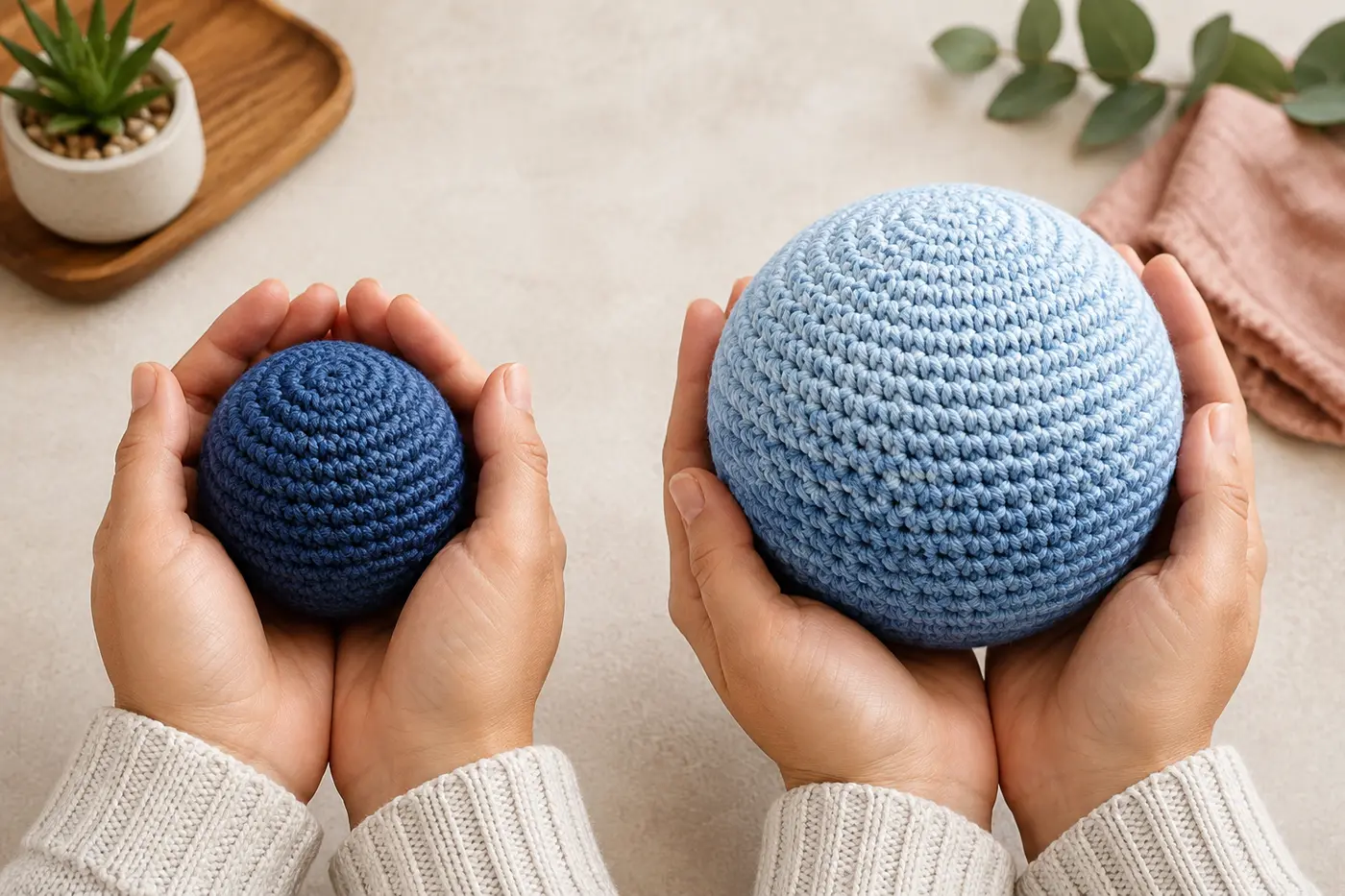
Crocheted stress balls have a major advantage over commercial ones: you can customize the firmness, size, texture, and filling. Make a set of three with different densities:
- Soft (calming): Filled loosely with polyester fiberfill. Provides gentle resistance. Best for slow, mindful squeezing.
- Medium (regulating): Filled with a mix of fiberfill and poly-pellets. Satisfying weight with moderate resistance.
- Firm (stimulating): Filled tightly with rice, flax seed, or tightly packed fiberfill. Strong proprioceptive input. Best for active stress relief.
Crochet each ball using tight single crochet to prevent filling from escaping. A standard amigurumi sphere pattern works perfectly — start with a magic ring, increase evenly to the desired diameter, work even for several rounds, then decrease.
Enhancement ideas: Add a few drops of essential oil (lavender, chamomile) to the filling for aromatherapy. Use textured stitches on the outside for additional tactile input. Make them in different colors to associate each firmness level with a color.
Project 5: The Marble Maze Fidget Pad
Difficulty: ⭐⭐⭐ (Intermediate) | Hook: 3.5mm | Yarn: Cotton
This ingenious project involves crocheting two flat panels with a channel stitched between them that contains a small marble or bead. The user pushes the marble through the crocheted maze using their fingers, feeling it move under the fabric.
Construction method:
- Crochet the back panel — a flat rectangle approximately 4×6 inches in tight single crochet.
- Crochet the front panel with raised channel walls created by working rows of front post double crochet or surface crochet that form a maze pattern.
- Place a marble or large bead between the panels and join them together around the edges, ensuring the marble can move freely through the channels but can’t escape.
Therapeutic benefit: This is an exceptional focus and grounding tool. The act of tracking and pushing the marble requires just enough concentration to interrupt anxious thoughts without being so demanding that it causes frustration. Occupational therapists have used marble mazes for decades — this is a crocheted, customizable version.
5. Category 2: Weighted Comfort Items
Project 6: Weighted Eye Mask with Lavender
Difficulty: ⭐⭐ (Easy) | Hook: 3.5mm | Yarn: Soft cotton or bamboo
This is one of the most impactful sensory items you can crochet. A weighted eye mask provides deep pressure stimulation to the eye area and forehead, which activates the vagus nerve — one of the most powerful pathways for switching the nervous system from “fight or flight” to “rest and digest.”
Construction:
- Crochet two eye-shaped panels (roughly 8 inches wide, 4 inches tall, with a slight concave curve to fit the nose bridge).
- Create an inner pouch from cotton fabric (or crochet it very tightly) and fill with a mixture of flax seed, dried lavender buds, and optional glass beads for weight.
- Encase the filling pouch between the two crocheted panels and join around the edges.
- Optional: Add a crocheted or elastic strap, or design it as a lay-on mask (no strap).
Weight guidelines: An eye mask should weigh approximately 6-12 ounces (170-340 grams). Start lighter and add weight until comfortable.
Bonus feature: The flax seed filling can be microwaved for 15-30 seconds for gentle warmth therapy, or placed in the freezer for cool compression. Both warmth and cold can enhance the calming effect.
Therapeutic benefit: Deep pressure on the eyes and forehead activates the oculocardiac reflex and vagus nerve, which directly slows heart rate and promotes parasympathetic activation. The lavender provides aromatherapy benefits (lavender has been clinically shown to reduce anxiety). This combination makes the weighted eye mask arguably the single most therapeutically powerful item on this list.
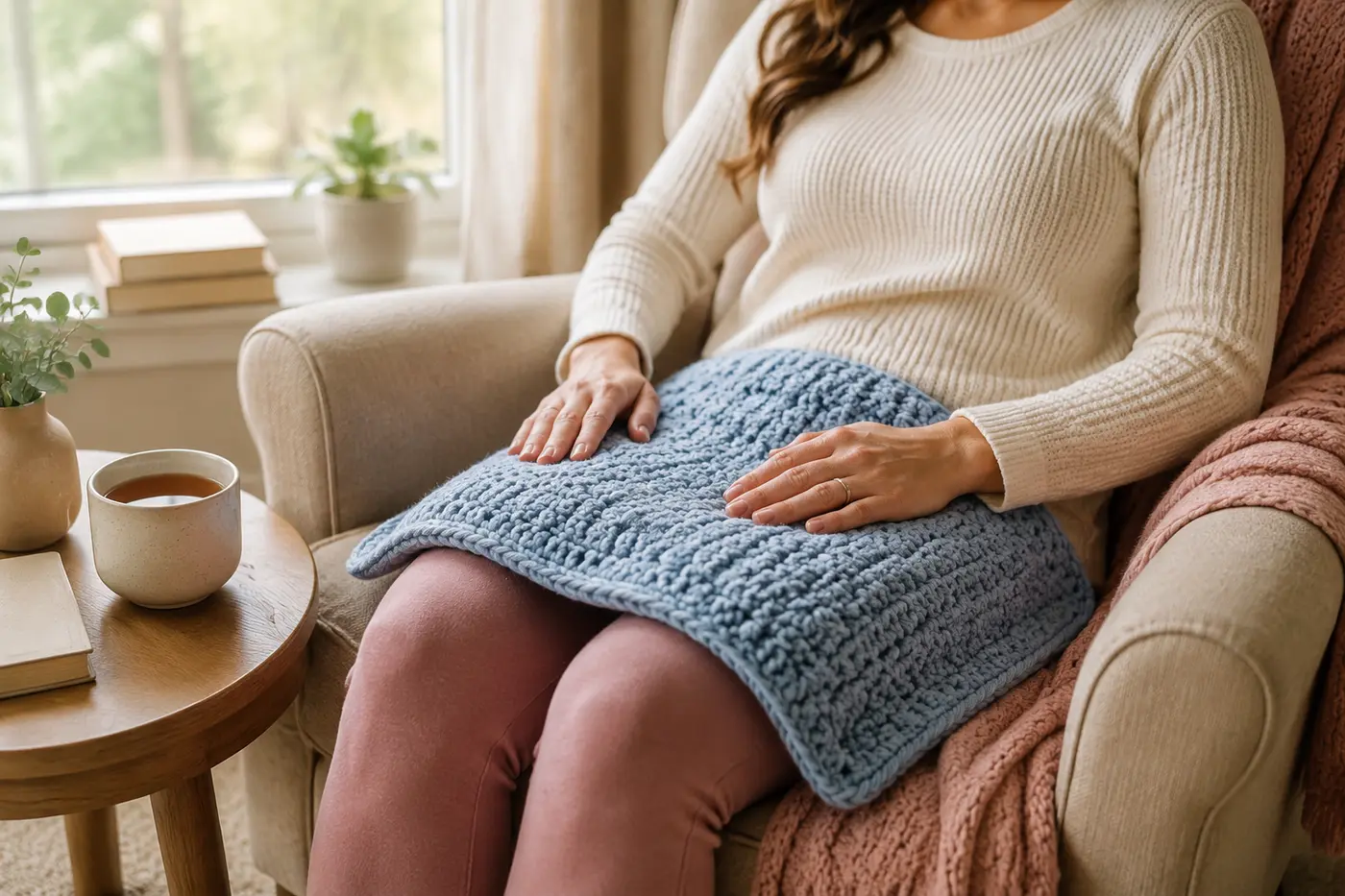
Project 7: Weighted Lap Pad
Difficulty: ⭐⭐⭐ (Intermediate) | Hook: 5mm | Yarn: Cotton or cotton blend
A weighted lap pad sits across the thighs and provides deep pressure stimulation similar to a weighted blanket but in a portable, less overwhelming format. These are particularly popular for:
- Children in school who need help sitting still and focusing
- Adults in office settings who experience anxiety
- People in waiting rooms (doctors, dentists, etc.)
- Anyone who finds a full weighted blanket too hot or heavy
Construction:
- Crochet a rectangular pad approximately 12×18 inches (adjustable to the user’s lap width).
- Create a grid of individual pockets (3×4 or 4×5 grid) by crocheting channels either during construction or by surface-crocheting dividers afterward.
- Fill each pocket with poly-pellets or glass beads through small openings, then close the openings.
- The grid design ensures the weight is evenly distributed and the beads don’t all shift to one side.
Weight guidelines: A lap pad should weigh approximately 2-5 pounds (0.9-2.3 kg), depending on the user’s size and preference. The general guideline is about 5-10% of the user’s body weight, but for a lap pad (not a full blanket), err on the lighter side.
Enhancement: Crochet one side in smooth single crochet and the other side in a textured stitch (bobbles, popcorns). This gives the user a choice of sensory experience — smooth side up when they want calm, textured side up when they want more stimulation.
Project 8: Weighted Stuffed Animal (“Calming Companion”)
Difficulty: ⭐⭐⭐ (Intermediate) | Hook: 3.5mm-4mm | Yarn: Soft cotton, chenille, or velvet yarn
This project combines the comforting companionship of a stuffed animal with the therapeutic benefits of weight. Designed for children (and adults who find comfort in plush objects — no shame!), this is essentially a weighted amigurumi.
Design considerations:
- Choose a simple, huggable shape — a bear, bunny, cat, or even an abstract “blob” creature.
- Make it large enough to be substantial (approximately 10-14 inches tall).
- Fill the body and limbs with a combination of polyester fiberfill (for softness) and poly-pellets (for weight).
- Concentrate weight in the body/torso for a grounding “heavy hug” sensation.
- Add sensory elements: different textured patches, a crocheted heart on the chest (something to feel), long floppy ears that can be stroked.
Target weight: 1-3 pounds depending on the intended user’s age and preference.
Safety note: If making for young children, ensure all poly-pellets are contained within an inner fabric pouch that is then enclosed in the crocheted body. Double-check that no beads can escape through stitches. This is not suitable for children under 3 due to small parts.
Project 9: Neck/Shoulder Wrap with Weighted Ends
Difficulty: ⭐⭐ (Easy) | Hook: 5mm-6mm | Yarn: Soft acrylic, chenille, or merino blend
A long, scarf-like wrap (approximately 6 inches wide by 48-54 inches long) with weighted pockets at each end. When draped over the shoulders, the weighted ends hang down the front of the body, providing gentle pressure on the shoulders and upper back.
The middle section is crocheted in soft, comforting stitches and can be used as a regular scarf or comfort wrap. The weighted ends contain sealed pouches of poly-pellets or glass beads.
Therapeutic benefit: The shoulders and upper back are where most people carry tension. Gentle weight on this area can help release muscle tension and provide proprioceptive grounding. This item is wearable and socially acceptable in any setting — it simply looks like a cozy scarf.
6. Category 3: Breathing & Grounding Tools
Project 10: The Breathing Buddy (Expandable Sphere)
Difficulty: ⭐⭐⭐⭐ (Advanced Intermediate) | Hook: 4mm | Yarn: Cotton or cotton blend
This is one of the most innovative sensory crochet projects to emerge in 2025-2026. A “breathing buddy” is a crocheted sphere designed to visually and physically expand and contract, guiding the user through deep breathing exercises.
How it works:
The sphere is constructed as a Hoberman sphere-inspired design — using a series of crocheted panels or strips connected in a way that allows the sphere to be compressed and expanded. When the user inhales, they slowly expand the sphere. When they exhale, they compress it. The physical act of expanding and contracting the sphere paces and regulates their breathing.
Construction approach:
- Crochet 6-8 diamond or leaf-shaped panels connected at their tips.
- The panels fan out when pulled and nest together when compressed.
- Add a small bell or rattle inside so there’s an auditory element tied to the breathing motion.
- Color the panels in a gradient (dark to light) so the user can visually see the sphere “grow” as they inhale.
Therapeutic benefit: Deep, diaphragmatic breathing is one of the most evidence-based techniques for anxiety reduction. The breathing buddy adds visual, tactile, and proprioceptive dimensions to breathing exercises, making them more engaging and effective — especially for children, who often struggle with abstract instructions like “take a deep breath.”
Project 11: Five-Finger Grounding Glove
Difficulty: ⭐⭐⭐ (Intermediate) | Hook: 3.5mm | Yarn: Multiple textures
Based on the popular “5-4-3-2-1” grounding technique used in cognitive behavioral therapy, this fingerless glove features a different texture on each finger, giving the wearer five distinct tactile experiences to focus on during anxious moments.
Design:
- Thumb: Smooth, tightly crocheted cotton (represent “1 thing you can taste” — smooth like a taste)
- Index finger: Bobble stitch texture (represent “2 things you can smell” — bumpy like a flower)
- Middle finger: Ribbed post stitches (represent “3 things you can hear” — ridges like sound waves)
- Ring finger: Loop stitch (soft, fuzzy) (represent “4 things you can touch”)
- Pinky: Chenille or velvet yarn, extra soft (represent “5 things you can see” — the softest, most calming)
The user puts on the glove and systematically touches each finger while going through the grounding exercise. The textures serve as physical anchors for each step of the technique.
Project 12: Crocheted Fidget Chain / Tangle
Difficulty: ⭐⭐ (Easy) | Hook: 4mm-5mm | Yarn: Cotton or cotton blend
A series of interconnected crocheted rings or links that can be twisted, wrapped around fingers, and manipulated — similar to a Tangle fidget toy but entirely crocheted. Each link is crocheted as a tube (or stuffed i-cord) formed into a ring and joined to the next link before closing.
Make each link in a different color and/or texture for varied sensory input. A chain of 8-12 links creates a satisfying fidget that can be twisted into different configurations endlessly.
Therapeutic benefit: The twisting, wrapping, and reconfiguring of the chain provides rhythmic, repetitive movement that’s calming and regulating. It keeps hands busy during meetings, phone calls, or while watching TV — redirecting nervous energy into a quiet, constructive activity.
7. Category 4: Sensory Wearables
Project 13: Textured Comfort Cuff (Wrist Band)
Difficulty: ⭐ (Beginner) | Hook: 3.5mm | Yarn: Soft cotton or bamboo
A wide wristband (approximately 2-3 inches wide) with a textured interior surface. The outside looks like a normal, stylish cuff bracelet, but the inside features subtle bumps, ridges, or raised stitches that the wearer can feel against their wrist throughout the day.
The wrist is a particularly sensitive area with high nerve density, making it an ideal location for subtle sensory input. Some wearers also find that gentle pressure on the wrist (similar to acupressure) helps with nausea and anxiety.
Construction tip: Work the cuff in rows (not rounds) and add a button or snap closure so it can be easily put on and taken off. Make the inner-facing surface with front post stitches or small bobbles — noticeable to the wearer but invisible from the outside.
Project 14: Sensory Hoodie String Replacement
Difficulty: ⭐ (Beginner) | Hook: 3mm-3.5mm | Yarn: Cotton or cotton blend
Many people with anxiety or ADHD habitually fidget with their hoodie strings. This project leans into that natural behavior by creating custom crocheted hoodie strings with built-in fidget features:
- Crochet a long i-cord or chain in the length of the original hoodie string.
- Add textured beads, knots, or small crocheted shapes at intervals along the string.
- Include a section of different texture (transition from smooth to bumpy and back).
- Finish the ends with crocheted spheres, cubes, or other shapes that can be squeezed or rolled between fingers.
Thread the custom string through the hoodie’s channel to replace the original. Now the wearer has a socially invisible fidget tool built right into their clothing.
Therapeutic benefit: This is a perfect example of “meeting the person where they are.” Instead of trying to stop a fidgeting behavior, we enhance it with purposeful sensory input. This approach is aligned with occupational therapy best practices.
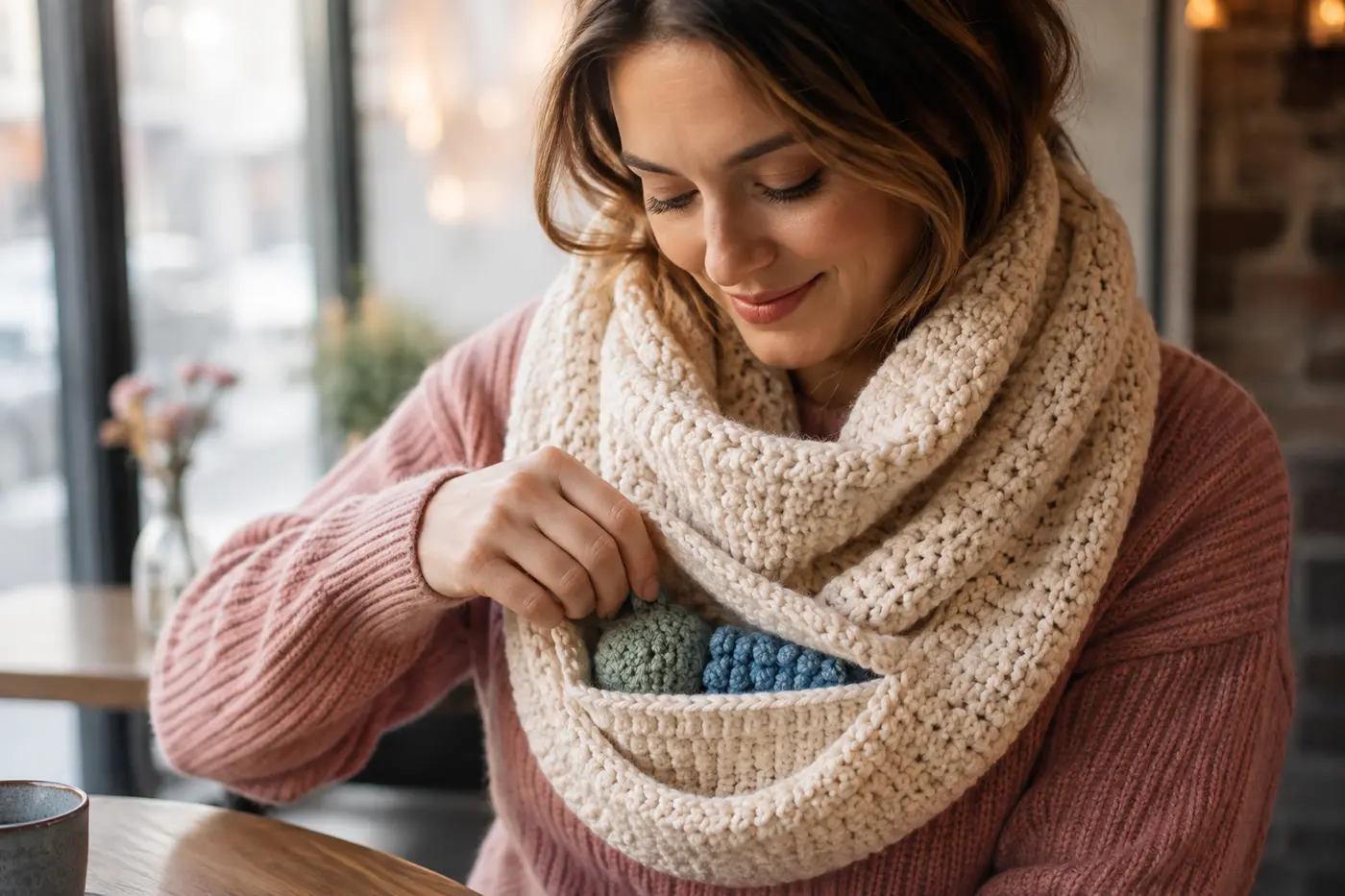
Project 15: The Comfort Pocket Scarf
Difficulty: ⭐⭐ (Easy) | Hook: 5mm-6mm | Yarn: Soft yarn (chenille, velvet, or soft acrylic)
A warm, soft scarf with hidden interior pockets that contain sensory surprises: a small crocheted stress ball, a textured fidget pad, or a pocket-sized worry stone. From the outside, it looks like a completely normal (and very cozy) infinity scarf or cowl. But the wearer can slip their hand into a discreet pocket and access their sensory tools without anyone knowing.
Construction:
- Crochet a wide infinity scarf or cowl in soft, comforting yarn.
- Before joining, create two or three small pockets on the interior surface by crocheting small pouches and stitching them to the inside of the scarf.
- Fill pockets with: a small stress ball, a crocheted textured patch, and/or a smooth worry stone.
- The pockets should be positioned where the wearer’s hands naturally rest when warming them in a scarf.
Therapeutic benefit: This wearable addresses one of the biggest barriers to using sensory tools: social stigma. Many adults feel self-conscious using visible fidget tools. A comfort pocket scarf is completely discreet — the user can access calming sensory input during social events, meetings, or public situations without drawing attention.
8. Customizing Sensory Items for Different Needs
Not all anxiety and sensory needs are the same. Here’s how to customize your projects based on who they’re for:
For Children (Ages 5-12)
- Use bright, engaging colors — children respond well to visual appeal.
- Make items small enough for little hands — scale patterns down by 20-30%.
- Ensure all items are machine washable (avoid wool, choose cotton or acrylic).
- Add fun shapes — animals, stars, hearts — to increase engagement.
- Prioritize durability. Kids are rough with things. Use tight stitches and reinforce seams.
- Safety: No small detachable parts for children under 5. Ensure all fillings are securely contained.
For Teens & Young Adults
- Focus on discreet, “cool” designs that won’t stand out as “therapy tools.”
- The hoodie string replacement, comfort cuff, and sensory strip are ideal.
- Neutral, sophisticated colors: black, gray, navy, olive, burgundy.
- Consider items that integrate with technology — a textured phone case cover, for example.
For Adults in Professional Settings
- Prioritize discretion above all. Items should look like normal accessories.
- Comfort pocket scarves, textured wrist cuffs, and worry stones are ideal.
- Elegant, muted colors and refined finishes.
- Consider items that can live on a desk: a beautifully crocheted stress ball that looks like décor, or a textured coaster that doubles as a fidget surface.
For Elderly Individuals
- Use extra-soft yarns (chenille, velvet, baby yarn) as elderly skin can be more sensitive.
- Make items larger and easier to grip for hands affected by arthritis.
- Weighted lap pads are particularly beneficial for elderly individuals with dementia or anxiety.
- Fidget muffs (crocheted tubes that go around both hands, with various textures and attached items on the outside) are widely used in dementia care.
- Use familiar, comforting colors — soft blues, greens, and warm neutrals.
For Individuals with Autism/Sensory Processing Differences
- Ask about sensory preferences first. Some individuals are sensory-seeking (they want more input), while others are sensory-defensive (they’re easily overwhelmed by input). This dramatically affects which items and textures are appropriate.
- For sensory seekers: Heavy textures, varied stimulation, weighted items, bright colors.
- For sensory avoiders: Smooth, consistent textures, gentle weight, muted colors, no scratchy yarns.
- When in doubt, provide options — a multi-texture strip lets the individual choose what feels right.
9. Creating Sensory Items for Others: Best Practices
If you’re making sensory items as gifts, for donation, or as part of a therapeutic practice, keep these important considerations in mind:
Communication is Key
Before making a sensory item for someone, ask them about their preferences:
- What textures do they find comforting? What textures do they dislike?
- Do they prefer heavy/weighted items or lightweight ones?
- Are there any material allergies or sensitivities?
- Where will they use the item? (Home, school, office, public?)
- Do they need it to be discreet?
- What colors do they find calming?
Include a Care Card
Every sensory item you give away should include a small card explaining:
- What the item is and how to use it
- What materials it’s made from
- Washing/care instructions
- Safety information (especially for weighted items and items with fillings)
Safety Considerations
- Weighted items should not exceed 10% of the user’s body weight. For lap pads and eye masks, this is rarely an issue, but it’s a critical guideline for weighted blankets.
- Never give a weighted item to an infant or someone who cannot remove it independently.
- All fillings (poly-pellets, beads, rice) should be securely contained with no possibility of escaping through stitches.
- If the item contains natural fillings (rice, flax seed, lavender), note that these items should NOT be submerged in water — spot clean only.
- Avoid buttons, beads, and other small attachments on items for children under 3.
Donation Opportunities
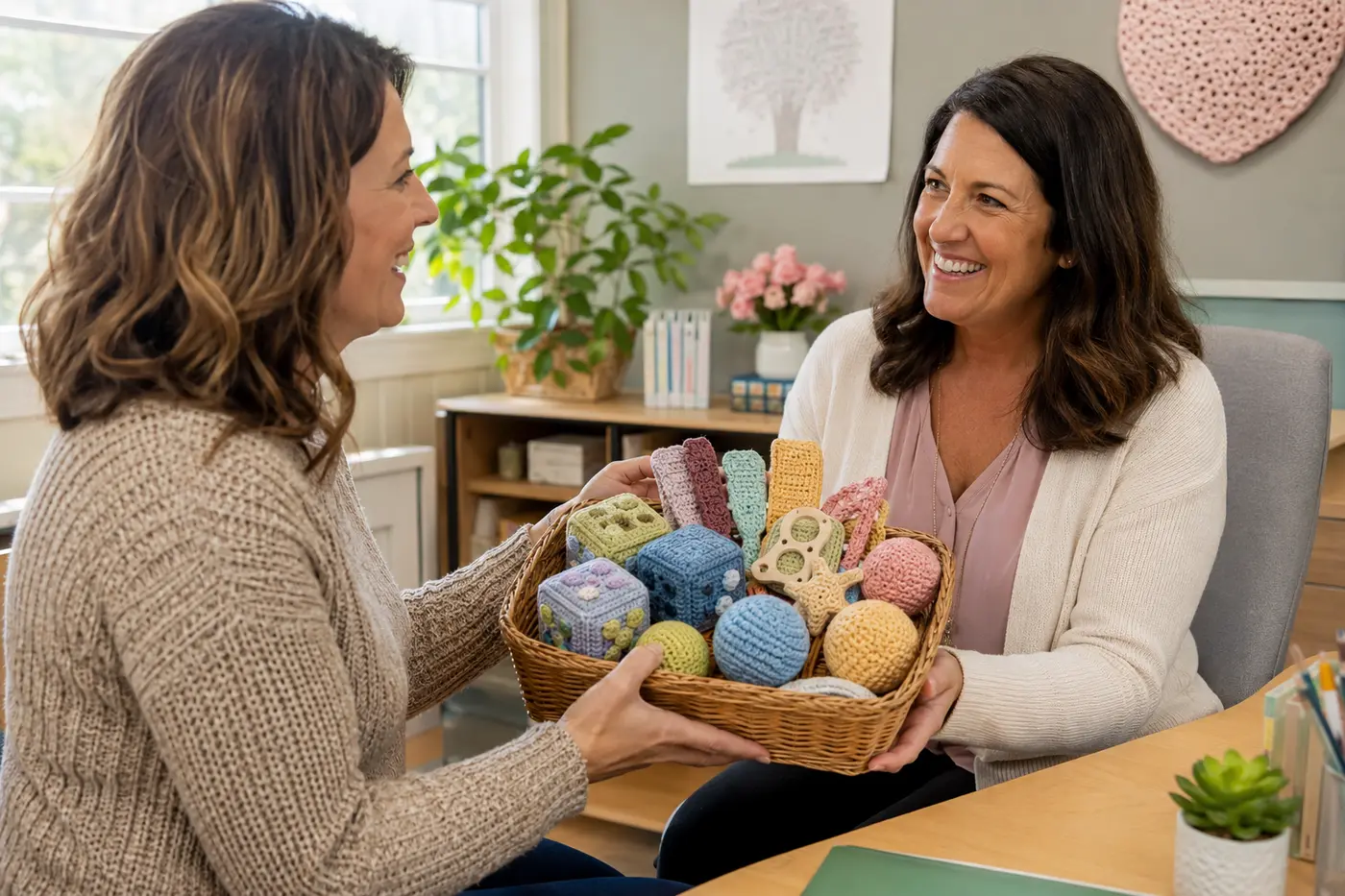
There are many organizations that accept crocheted sensory items:
- Schools and special education programs — sensory fidgets and weighted lap pads are always needed.
- Therapy offices (occupational therapy, counseling, play therapy) — contact local practices to ask if they accept donations.
- Children’s hospitals — comfort items for young patients.
- Memory care facilities — fidget muffs and weighted lap pads for elderly residents.
- Crisis centers and shelters — comfort items for individuals experiencing trauma.
- Veterans’ organizations — sensory items can be helpful for PTSD management.
10. Additional Resources
Books
- Crochet Therapy: 20 Mindful, Relaxing Projects by Betsan Corkhill — The foundational text on therapeutic crochet.
- The Sensory-Informed Crafter (2025) — A newer release exploring the intersection of occupational therapy and fiber arts.
- Amigurumi for Anxiety — Patterns specifically designed for therapeutic purposes.
Organizations
- Stitch Links (stitchlinks.com) — A UK-based organization researching the therapeutic benefits of knitting and crochet.
- The Crochet & Knitting Therapy Association — Offers resources for using fiber arts in therapeutic settings.
Grounding Techniques to Pair with Sensory Items
- 5-4-3-2-1 Technique: Name 5 things you see, 4 you can touch, 3 you hear, 2 you smell, 1 you taste. Use your sensory items as the “touch” anchor.
- Box Breathing: Inhale 4 counts, hold 4 counts, exhale 4 counts, hold 4 counts. Use the breathing buddy sphere to pace your breath.
- Progressive Muscle Relaxation: Tense and release each muscle group while holding a stress ball — squeeze during tension, release during relaxation.
- Mindful Touch Meditation: Close your eyes and slowly explore a textured sensory item with your fingers, noticing every detail without judgment.
Final Thoughts: Crochet as Care
In 2026, we understand more than ever that mental health care isn’t just about therapy appointments and medication (though those are important too). It’s also about the small, daily practices that help us regulate our nervous systems and navigate a world that often feels overwhelming.
Crocheting sensory items sits at the beautiful intersection of creativity, self-care, and evidence-based therapeutic practice. Every stitch you make is an act of care — whether for yourself or for someone you love. And unlike many wellness trends that require expensive equipment or subscriptions, crochet asks for nothing more than a hook, some yarn, and your own two hands.
Whether you make one small worry stone or an entire toolkit of sensory items, you’re creating something genuinely meaningful. You’re making a tangible tool for peace in a world that desperately needs more of it.
Take care of yourselves, friends. And happy crocheting. 🧶💛
Did this article help you? We’d love to hear about the sensory items you’ve crocheted! Share your projects with us by tagging @crochelly on social media, or leave a comment below with your experience.
For more crochet patterns, tutorials, and inspiration, explore Crochelly.com.