My Favourite Sustainable Yarn Brands: Where Our Materials Come From and Why
The yarn brands, natural fibres, and sourcing principles Crochelly trusts when choosing materials for handmade pieces.
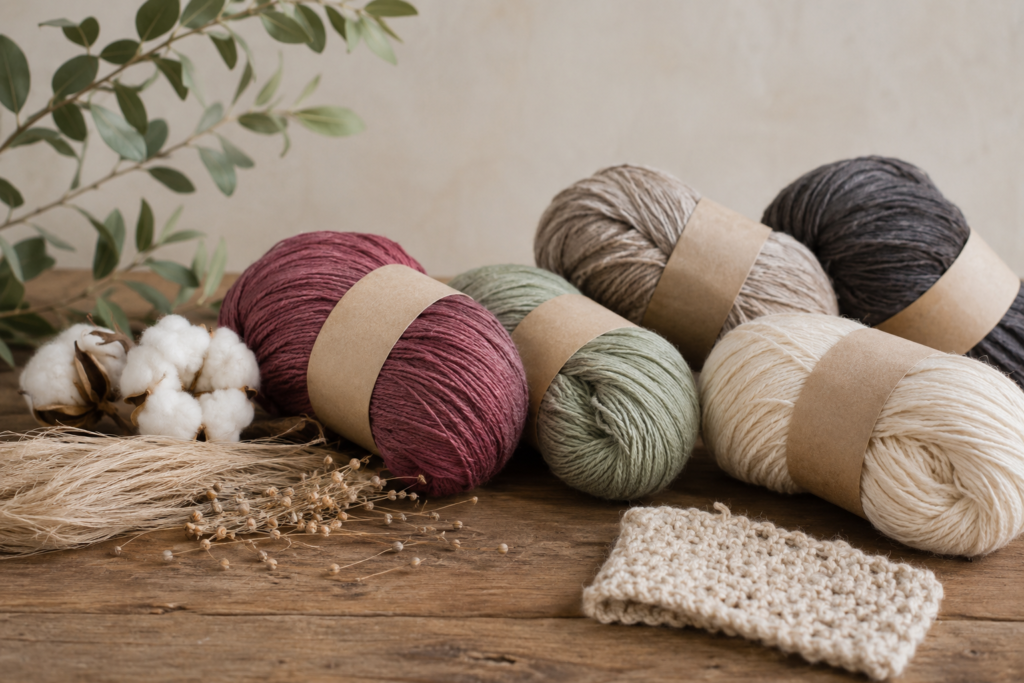
Every piece in the Crochelly collection begins with a material decision. Before a single stitch is made, there is a question: what should this be made of, and where should that material come from?
These questions matter to me more than I can briefly explain, but the short version is this: the fibre content of a handmade piece determines everything — how it feels, how it performs, how long it lasts, and what happens to it at the end of its life. A piece made in cheap synthetic yarn is not the same object as a piece made in organic merino, even if they are crocheted identically.
This post shares the yarn brands I return to consistently — why I trust them, what I use them for, and what to look for if you are choosing sustainable yarns yourself.
What I Look for in a Sustainable Yarn
Transparent Sourcing
I need to know where the fibre came from, how the animals were treated if it is an animal fibre, and where the yarn was processed. If a brand cannot answer these questions directly, I move on.
Certification Where Available
Third-party certifications — GOTS for organic textiles, mulesing-free certification for merino, RWS for responsibly sourced wool — are not sufficient on their own but they are meaningful as part of a broader commitment.
Natural Fibre Content
I prioritise yarns made from natural, renewable fibres. Not because synthetic yarns have no place, but because natural fibres biodegrade, breathe, and age in ways that synthetics simply cannot replicate.
Genuine Quality at the Hook
Sustainability matters. So does quality. A yarn that pills after the first wear, that breaks during making, or that bleeds colour in the wash is not a good material regardless of its sourcing credentials.
Fair Treatment of Makers
Many sustainable yarn brands are small operations run by people who take their work seriously. I try to support those brands — not just the large certified corporations — because diversity in the yarn industry matters.
Consistent Batch Quality
I need to know that the yarn I buy in six months will behave identically to the yarn I bought last season. Inconsistent quality between batches is a practical problem that affects the consistency of Crochelly products.
The Brands I Trust and Return To
Paintbox Yarns Simply DK — Cotton Edition
UK-Based · 100% Cotton
A consistently high-quality 100% cotton DK weight that I return to for spring and summer garments. The colour range is exceptional — over 50 shades, all with strong colour fastness — and the twist of the yarn gives beautiful stitch definition that photographs particularly well. It washes easily, softens with use, and is widely available without the supply consistency issues that affect some smaller producers.
Drops Merino Extra Fine
Norway · 100% Superwash Merino Wool
The merino I reach for most often. Drops Merino Extra Fine is a superwash-treated merino in a sport weight that is extraordinarily soft against the skin, consistent across batches, and available in a colour range that covers everything from clean neutrals to rich seasonal shades. The superwash treatment means it can be machine washed on a gentle cycle — an important practical consideration for garments that will be worn regularly. The price point is honest for a genuine merino of this quality.
We Are Knitters The Wool — Alpaca Edition
Spain · 100% Baby Alpaca
Baby alpaca at a weight and quality that I use exclusively for premium pieces. The halo on this yarn is exactly right — present and luxurious without obscuring the stitch pattern — and the warmth-to-weight ratio is exceptional. It is significantly softer than standard alpaca and completely hypoallergenic, which makes it the right choice for baby items and for customers who find wool irritating. The colour palette skews toward beautiful naturals and dusty tones that feel genuinely timeless.
Lion Brand 24/7 Cotton
USA · 100% Mercerised Cotton
A mercerised cotton worsted weight that I use for home decor and bag production. Mercerisation gives cotton yarn a slight sheen, increased strength, and better colour absorption — which means deeper, richer shades that hold their vibrancy through heavy washing. For market bags, storage baskets, and home accessories that will be used daily and washed frequently, this is the right material. It does not pill, it does not stretch out of shape, and it maintains its structure indefinitely.
Paintbox Yarns Simply Linen
UK-Based · 60% Linen, 40% Cotton
A linen-cotton blend that I use for summer garments and transitional pieces. The linen content gives the yarn the breathability and drape that pure cotton lacks, while the cotton content softens the initial stiffness that pure linen can have. The blend produces a fabric that starts slightly structured and becomes increasingly fluid and beautiful with washing and wear — improving with age in a way that feels genuinely special. It is also one of the more sustainably produced fibres available, with linen requiring significantly less water and pesticide use than conventional cotton.
Sustainability Comparison Across Fibre Types
| Fibre | Biodegradable | Water Use | Renewability | End-of-Life | Overall Rating |
|---|---|---|---|---|---|
| Organic Cotton | Composts safely | ||||
| Merino Wool | Fully biodegrades | ||||
| Alpaca | Fully biodegrades | ||||
| Linen | Fully biodegrades | ||||
| Bamboo | Biodegrades | ||||
| Standard Acrylic | Persists for centuries | ||||
| Recycled Acrylic | Still persists long-term |
A Note on “Sustainable” Labels
The word sustainable is used so broadly in the textile industry that it has almost lost meaning. A brand that calls itself sustainable should be able to tell you specifically: where the fibre was grown, under what conditions it was processed, what certifications the production facility holds, and what the fibre does at the end of its life. If the answers are vague, the claim is vague. Ask specific questions and expect specific answers.
How to Find Sustainable Yarn for Your Own Projects
If you are a crocheter sourcing your own materials, here is the approach I recommend:
Start With Fibre, Not Brand
Decide on the fibre type first based on what you are making and the season it is for. Then find brands that produce that fibre well. Researching by fibre type rather than by brand name gives you a more informed starting point and stops you from being swayed by marketing over substance.
Read the Label — All of It
Every yarn label contains the fibre content, the country of origin, the care instructions, and the yardage. The country of origin tells you where the yarn was processed — not necessarily where the fibre was grown, but it is a starting point. Vague labels (simply “wool” with no country of origin) are a signal to ask more questions before purchasing.
Ask the Maker Directly
Small independent yarn producers — especially hand-dyers — are almost always willing to talk directly about their sourcing. They are often passionate about it. Asking them where their base yarn comes from, who their supplier is, and what certifications they hold will give you more information than any marketing materials, and will also show them that their customers care about these questions.
Why We Share This Information
We share our sourcing practices — including the specific brands we use — because we believe transparency creates trust, and trust is the foundation of any genuine relationship between a maker and the people who support their work.
We also share it because we want our customers to be informed consumers — people who ask good questions not just of us but of every brand they buy from. The more consumers demand transparency and sustainability, the more the entire industry moves in that direction.
Your purchase is a vote. Make it an informed one.
See These Materials in Action
Every fibre described in this post is used in our collection. Browse and find your piece.