How to Build a Profitable Crochet Business with Quick Projects in 2026
A complete beginner’s roadmap to building a profitable crochet business with quick projects, smart pricing, batch production and effective sales channels.
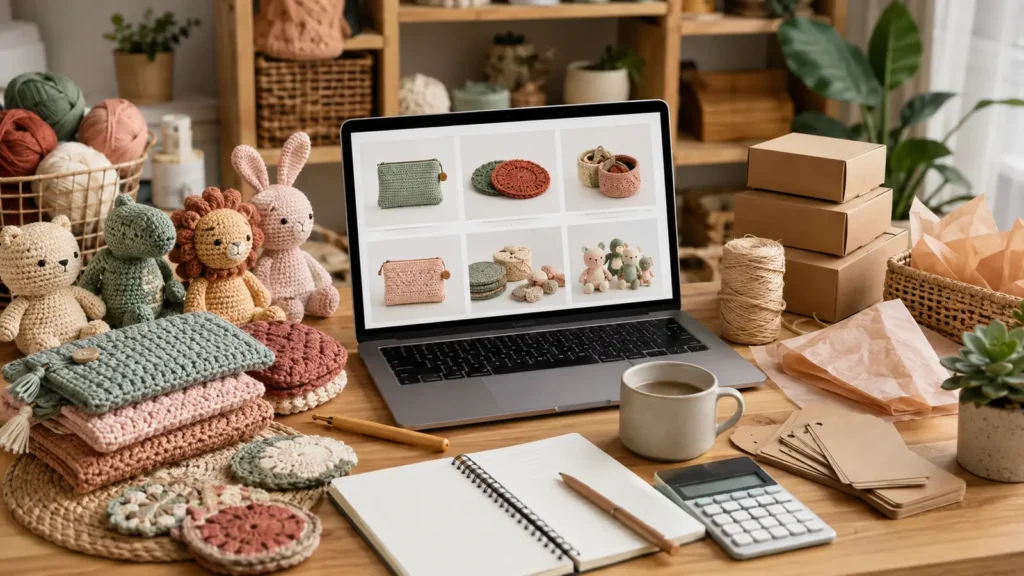
How to Build a Profitable Crochet Business with Quick Projects in 2026: The Complete Beginner’s Roadmap
Last Updated: January 2026 | Category: Quick Projects to Sell | Reading Time: 22 minutes
So you’ve been crocheting for a while. Maybe months, maybe years. Friends and family rave about your work. Strangers on Instagram ask, “Do you sell these?” And somewhere in the back of your mind, a little voice keeps whispering: “I could actually make money doing this.”
You’re right. You absolutely can.
But there’s a canyon-sized difference between crocheting things people compliment and running a crochet business that puts real money in your bank account. I’ve seen too many talented makers dive in headfirst, only to burn out three months later because they chose the wrong products, priced too low, spent 12 hours making a blanket they sold for $40, or tried to be everything to everyone.
This guide is designed to prevent all of that.
Over the next several thousand words, I’m going to walk you through exactly how to build a profitable crochet business in 2026 using quick-turnaround projects. We’re talking real strategy — not vague “follow your passion” fluff. Product selection, pricing psychology, batch production systems, branding on a budget, selling platforms, legal basics, and scaling from your first $100 to consistent four-figure months.
Whether you want a casual side hustle that covers your yarn habit or a full-fledged business that replaces your day job, this roadmap will get you there.
Let’s build this thing.
Chapter 1: The Mindset Shift — From Hobbyist to Business Owner
This is the chapter most crochet business guides skip, and it’s arguably the most important one. Because the biggest obstacle between you and a profitable crochet business isn’t your skill level, your hook speed, or your follower count. It’s the way you think about your work.
The Hobbyist vs. Business Owner Mindset
| Hobbyist Thinking | Business Owner Thinking |
|---|---|
| “I’ll make whatever I feel like today.” | “I’ll make what my customers are buying.” |
| “I don’t want to charge too much — it’s just yarn and time.” | “My pricing reflects the value of my skill, time, and artistry.” |
| “I’ll figure out what to sell when I get to the market.” | “I have a product strategy based on data and customer feedback.” |
| “I can’t charge that much — I could buy it at Walmart for $5.” | “My customers aren’t comparing me to Walmart. They’re buying handmade because it’s NOT Walmart.” |
| “Selling feels uncomfortable and pushy.” | “I’m offering something valuable that people are actively looking for.” |
Here’s a truth that took me years to internalize: people who buy handmade crochet are not looking for the cheapest option. They’ve already walked past the $2 machine-made version at a big box store. They’re at your booth, on your Etsy page, or in your DMs because they want something different. Something made with care. Something with a story.
When you undercharge, you’re not being humble — you’re undermining the entire handmade market and devaluing your own expertise. Stop it.
Your Relationship with “Imperfection”
Another mindset trap: waiting until everything is “perfect” to start selling. Your first batch of scrunchies doesn’t need to be flawless. Your Etsy shop doesn’t need professional photography on day one (though it helps). Your branding doesn’t need to look like it came from a design agency.
Done is better than perfect. Shipped is better than sitting in a drawer. You will improve with every single item you make and every single sale you complete. But you have to start.
Chapter 2: Choosing Your Product Line — What to Make (And What to Avoid)
Product selection is where your crochet business will succeed or fail. The wrong products will leave you overworked, underpaid, and sitting on unsold inventory. The right products will practically sell themselves.
The Quick-Project Profit Matrix
I evaluate every potential product through four lenses:
- Speed: Can I make it in under 2 hours? (Ideally under 1 hour)
- Demand: Are people actively searching for and buying this?
- Margin: Can I sell it for at least 3× material cost while paying myself a fair hourly rate?
- Repeatability: Can I batch produce this efficiently without getting bored out of my mind?
A product needs to score high on all four to earn a spot in your lineup.
The 2026 Quick-Project Hall of Fame
Based on market data, Etsy search trends, craft fair reports, and my own sales experience, here are the categories that consistently perform best:
🏆 Tier 1: The Powerhouses (High demand, fast production, excellent margins)
- Crochet scrunchies and hair accessories
- Amigurumi keychains and bag charms
- Spa/bath sets (scrubbies, washcloths, soap savers)
- Seasonal items (holiday ornaments, Valentine hearts, Halloween decor)
- Baby accessories (beanies, headbands, booties)
🥈 Tier 2: Strong Performers (Good demand, moderate production time, solid margins)
- Bucket hats and beanies
- Coaster sets
- Market/tote bags
- Cup cozies and tumbler sleeves
- Ear warmers and headbands
🥉 Tier 3: Niche Winners (Narrower audience but passionate buyers)
- Pet accessories (bandanas, bow ties, toy bones)
- Crochet jewelry (earrings, bracelets)
- Book sleeves and bookmarks
- Small home décor (mini wall hangings, plant hangers)
What to AVOID Selling (At Least When Starting Out)
🚫 Products That Will Tank Your Profitability:
- Blankets and afghans — 20-40+ hours of work for a product most people won’t pay more than $80–$150 for. The math simply doesn’t work unless you’re charging $300+ and have a luxury customer base.
- Large garments (sweaters, cardigans) — Same problem. Huge time investment, sizing headaches, and returns risk.
- Items that require fitting — Anything where size matters increases your customer service burden and return rate.
- Highly complex amigurumi — That incredible 12-inch dragon with 47 separate pieces? Amazing art. Terrible product for a business focused on volume and profit.
- Copyrighted characters — Making and selling Pikachu or Baby Yoda amigurumi is IP infringement, full stop. It doesn’t matter that “everyone does it.” It can result in takedowns, fines, or legal action.
How to Research What’s Actually Selling
Don’t guess — research. Here’s how:
- Etsy search: Type “crochet” into the Etsy search bar and see what auto-completes. Those suggestions are based on real buyer searches. Use tools like eRank or Marmalead for deeper keyword data.
- Pinterest Trends: Search “crochet” on Pinterest Trends to see what’s gaining momentum.
- TikTok: Search #crochetbusiness and #crochetseller to see what makers are showing off as bestsellers.
- Craft fair observation: Before investing in a booth, attend markets as a customer. Watch what people actually buy, not just what they look at.
- Ask your audience: If you have even a small social media following, post polls asking what they’d buy. Real data beats assumptions every time.
Chapter 3: The Batch Production System — How to 3X Your Output
This chapter will transform your productivity. Batch production is the single most impactful operational change you can make in your crochet business.
What Is Batch Production?
Instead of making one complete item from start to finish before starting the next, you break the process into stages and complete each stage for your entire batch before moving on.
Example: Batch Producing 20 Amigurumi Keychains
Without batching (sequential production):
- Crochet body #1 → Stuff → Add eyes → Attach keychain → Weave in ends → Package
- Crochet body #2 → Stuff → Add eyes → Attach keychain → Weave in ends → Package
- Repeat 18 more times
Estimated time: 25 minutes each × 20 = 8.3 hours
With batching:
- Crochet all 20 bodies (you get into a rhythm and speed up significantly)
- Stuff all 20
- Attach all 40 safety eyes
- Attach all 20 keychain findings
- Weave in all ends
- Package all 20
Estimated time: 15–18 minutes each × 20 = 5–6 hours
That’s a 28–40% time savings on the exact same products. Over a month of production, this adds up to dozens of extra items in your inventory.
Why Batching Works
- Muscle memory: Your hands learn the pattern and get faster with repetition
- Reduced context switching: You’re not constantly shifting between different tasks and tools
- Material efficiency: You can plan color batches, reduce yarn waste, and buy materials in bulk
- Quality consistency: Items in a batch tend to be more uniform in size and appearance
Setting Up Your Batching Workflow
Here’s a weekly production schedule I recommend for someone doing this as a side hustle (10–15 hours per week):
| Day | Activity | Time |
|---|---|---|
| Monday | Batch crochet: Main components (bodies, bases, etc.) | 2–3 hours |
| Tuesday | Batch crochet: Continue main components or secondary pieces | 2–3 hours |
| Wednesday | Assembly: Stuffing, attaching hardware, weaving ends | 2 hours |
| Thursday | Packaging, tagging, photography for new listings | 1.5 hours |
| Friday | Business admin: Social media content, shipping orders, restocking supplies | 1.5 hours |
| Weekend | Craft fair / market day (if applicable) or Etsy shop management | Variable |
The “Netflix & Crochet” Strategy
Let’s be real — batch crocheting 30 identical scrunchies isn’t exactly thrilling. This is where entertainment comes in. Queue up a series, a podcast, or an audiobook. Many crochet business owners report that batch production sessions are when they “catch up on shows.” The crochet becomes almost automatic while your brain is engaged elsewhere. Win-win.
Chapter 4: Branding Your Crochet Business on a $50 Budget
You don’t need to hire a graphic designer or spend hundreds on branding. Here’s how to create a professional, cohesive brand identity for under $50.
Step 1: Choose Your Business Name
Your name should be:
- Easy to spell and pronounce
- Memorable
- Available as a social media handle (check Instagram, TikTok, and Etsy)
- Not too similar to existing brands
Naming formulas that work:
- [Your Name] + Crochet/Makes/Studio (e.g., “Sarah’s Stitchery”)
- Adjective + Yarn/Hook/Stitch (e.g., “Golden Hook Co.”)
- Something evocative (e.g., “Knotted Roots,” “Loopy & Co.”)
Step 2: Create Your Visual Identity (Free with Canva)
Open a free Canva account and create:
- A simple logo: Don’t overthink this. A clean font-based logo with a small icon (yarn ball, crochet hook, simple flower) is more than enough to start.
- A color palette: Pick 3–4 colors that feel like your brand. Stick to them across everything — tags, social media, packaging.
- Product tags: Design a tag template that includes your logo, care instructions, social media handles, and a brief “thank you” message.
- Social media templates: Create 3–5 reusable post templates so your feed looks cohesive.
Step 3: Physical Branding Materials (~$30–$50)
- Business cards: Order from Vistaprint or MOO — typically $15–$25 for 250 cards
- Product tags: Print on kraft cardstock at home or order from a print-on-demand service
- Stickers: Custom logo stickers from Sticker Mule or Sticker Giant — $20–$30 for 50 stickers
- Thank-you cards: A small card tucked into every order goes a long way. Include a discount code for their next purchase to drive repeat business
Step 4: The Unboxing Experience
In 2026, the unboxing experience matters enormously, especially for online orders. When a customer opens your package, every detail communicates your brand’s value:
- Tissue paper in your brand colors (buy in bulk from Dollar Tree — literally $1)
- A branded sticker sealing the tissue paper
- The product on its tag/card
- A small thank-you note with a personal touch (handwritten if possible)
- A care instruction card
- Optional: a small freebie (a single scrubbie, a mini bookmark) that costs you $0.25 but creates massive goodwill
This entire packaging setup costs under $1 per order but dramatically increases perceived value, review likelihood, and repeat purchase rate.
Chapter 5: Pricing Psychology — Why $24 Outsells $20
Pricing isn’t just math — it’s psychology. Let’s go deeper than the basic formula.
The Anchoring Effect
Always display your highest-priced items at the front of your booth or at the top of your Etsy shop. When a customer sees a $45 cowl first, a $12 keychain feels like a steal by comparison. Without that anchor, the $12 keychain might feel expensive on its own.
Charm Pricing vs. Prestige Pricing
Charm pricing ($9.99, $19.97) works for everyday, practical items. It signals “good deal.”
Prestige pricing ($25, $40, $50) works for gift-quality and luxury-positioned items. It signals “this is worth it.”
For most crochet products, I recommend prestige pricing with strategic charm pricing on impulse items:
- Scrunchies: $8 or $9 (charm)
- Keychain: $12 (prestige)
- Spa set: $28 (prestige)
- Bucket hat: $38 (prestige)
The Bundle Strategy
Bundles are the most powerful pricing tool in your arsenal. They:
- Increase average order value
- Move slow sellers when paired with fast sellers
- Create perceived value (“I’m getting a deal!”)
- Solve the gift-giving problem for your customers
Bundle examples that work beautifully:
- “Hair Care Set” — 3 scrunchies + 1 headband = $28 (individual total would be $35)
- “Self-Care Spa Box” — Washcloth + 6 scrubbies + soap saver = $32
- “New Baby Gift Set” — Beanie + booties + small lovey = $45
- “Pet Parent Pack” — Bandana + toy + paw-print keychain = $30
Why $24 Outsells $20: The “Just Right” Principle
This one surprises people. In handmade markets, pricing too low can actually hurt sales. Here’s why:
A crochet cowl priced at $20 makes buyers think: “This is cheap… is the quality okay? Is this actually handmade? What’s wrong with it?”
The same cowl priced at $24–$28 signals: “This is a quality handmade item at a fair price.”
At $45+, it signals: “This is premium. This is a gift-worthy, special piece.”
Your price tells a story about your product before the customer even touches it. Make sure it’s the right story.
Chapter 6: Setting Up Your Sales Channels
Etsy: Your Online Home Base
If you’re going to sell online, start with Etsy. It’s still the dominant marketplace for handmade goods in 2026, with over 90 million active buyers specifically looking for unique, handcrafted items.
Etsy Setup Checklist:
- ☐ Create your shop with a name that matches your brand
- ☐ Write a compelling “About” section — tell your story, show your workspace, be human
- ☐ Set up shop policies (shipping times, returns, custom orders)
- ☐ Create listing templates you can replicate for similar products
- ☐ Set up Etsy Ads with a small daily budget ($1–$3/day) to test
Etsy Listing Optimization (The 2026 SEO Playbook):
- Title: Front-load with keywords buyers actually search. Example: “Crochet Scrunchie Set of 3 | Velvet Hair Ties | Handmade Gift for Her | Stocking Stuffer”
- Tags: Use all 13 tags. Mix broad (“crochet scrunchie”) with specific (“velvet hair scrunchie”) and occasion-based (“gift for teen girl”)
- Photos: Minimum 5 photos per listing. Include: product on white background, product in use (on a person), size reference, detail/texture shot, packaging
- Description: Lead with benefits (“Keep your hair stylishly secured with these ultra-soft velvet scrunchies”), then details (materials, dimensions, care), then your story
- Variations: Offer color options within a single listing rather than creating separate listings for each color
Social Media: Your Free Marketing Engine
Instagram Strategy:
- Post 3–5 times per week (mix of Reels, carousels, and stories)
- Content types that perform: process videos (satisfying stitching clips), before/after, market prep, new product reveals, customer photos
- Use location tags for local visibility
- Engage authentically with the crochet community — comment on others’ posts, respond to every DM and comment
TikTok Strategy:
- Short-form “make with me” videos perform exceptionally well
- Show the transformation from yarn to finished product
- “What I brought vs. what sold” craft fair recap videos generate massive engagement
- Don’t overthink production quality — authentic, well-lit phone videos outperform polished content on TikTok
Chapter 7: Craft Fair Mastery — Turning a 6-Hour Market into $500+
Craft fairs and artisan markets remain one of the most profitable sales channels for crochet sellers in 2026. Here’s how to maximize every market day.
Before the Market
Inventory Planning:
- Bring 2–3× more inventory than you expect to sell (running out is worse than having leftovers)
- Stock heavy on your proven bestsellers (60% of inventory)
- Include a few “showstopper” items — these attract people to your booth even if they don’t buy them
- Have a range of price points: $5–$10 impulse buys, $15–$25 mid-range, $30–$50 premium
Booth Setup Essentials:
- Tablecloth in a neutral color (white, cream, or natural linen)
- Vertical displays (risers, shelves, stands) — height variation catches the eye
- Clear pricing on everything (customers who have to ask the price often walk away)
- A banner or sign with your business name and logo
- Business cards and social media signage
- A card reader (Square, Stripe, or similar) — accepting cards increases sales by 30–50%
During the Market
Sales Psychology Tips:
- Greet everyone warmly but don’t hover. “Hi! Feel free to touch anything — it’s all handmade!” is the perfect opener. Then step back and let them browse.
- Tell the story. When someone picks up an item, that’s your cue: “Those are hand-crocheted with organic cotton — they’re a great zero-waste alternative to disposable cotton pads.”
- Suggest bundles. “Those scrunchies are $8 each, or you can grab any three for $20 — they make great gifts!” This simple upsell can increase your average transaction by 40%.
- Create urgency (honestly). “Those are one of my bestsellers — I only have a few left in that color” works if it’s true.
- Offer to hold items. If someone is browsing with full hands, offer to set items aside. This creates psychological ownership.
After the Market
- Track everything: What sold, what didn’t, total revenue, total costs (booth fee, materials, food, gas)
- Photograph your booth (both at setup and throughout the day) for social media content
- Post a market recap on Instagram/TikTok within 24 hours while the momentum is fresh
- Follow up with email subscribers you collected (always have a sign-up sheet!)
- Restock what sold out immediately so you’re ready for the next event
💡 Real Numbers: What a Successful Market Day Looks Like
Booth fee: $75
Material costs for inventory brought: $120
Total revenue: $580
Items sold: 42 items across 28 transactions
Average transaction: $20.71
Net profit (before time): $385
Time investment (setup, market, teardown): 8 hours
Effective hourly rate: $48.13/hour
These are realistic numbers for a well-prepared seller at a good market in 2026. Your first market might be lower — that’s normal. You improve with each one.
Chapter 8: The Boring-But-Important Legal and Tax Stuff
I know, I know. You’d rather be crocheting. But spending an afternoon on this now will save you headaches (and potentially money) later.
Business Structure
For most beginning crochet sellers in the US, a sole proprietorship is the simplest starting point. You don’t need to file any special paperwork — you ARE your business by default when you start selling.
Once you’re consistently earning $1,000+/month, consider forming an LLC for liability protection and potential tax benefits. The cost varies by state ($50–$500 filing fee).
Taxes
- In the US, you must report all business income, even from hobby sales
- As of 2026, payment platforms (Etsy, PayPal, Venmo) report earnings over $600 to the IRS via 1099-K
- Track your expenses meticulously — yarn, hooks, patterns, booth fees, packaging materials, mileage to markets, a portion of your internet bill, and even this course/blog are all potentially deductible
- Set aside 25–30% of your profit for taxes (self-employment tax plus income tax)
- Consider using accounting software like Wave (free) or QuickBooks Self-Employed
- Consult a tax professional once your business generates significant income — the cost of an accountant is usually offset by the deductions they find
Sales Tax
Most states require you to collect sales tax on physical products sold within your state. Check your state’s requirements, get a sales tax permit (usually free), and configure your Etsy shop or POS system accordingly.
Insurance
Many craft fairs require vendors to carry general liability insurance. Policies specifically for craft vendors are available for $200–$400/year from providers like ACT Insurance. Even if not required, it’s smart protection as your business grows.
Product Safety
- Baby and children’s items are subject to CPSIA regulations in the US. Key requirements: products must be tested for lead and phthalates, and must have tracking labels. Research this thoroughly before selling baby items.
- Include care labels on all items (fiber content, washing instructions) — it’s professional and legally recommended
- Use safety eyes (not buttons or glued-on eyes) for any amigurumi that could be given to children under 3
Chapter 9: Scaling — From Side Hustle to Serious Income
Once you’ve found your groove and are consistently selling, here’s how to grow.
Level 1: Optimize ($100–$500/month)
- Identify your top 3 bestselling products and focus production on those
- Refine your batch production system
- Establish a consistent social media posting schedule
- Apply to better-quality (higher foot traffic) markets
- Start building an email list
Level 2: Expand ($500–$2,000/month)
- Add complementary products to your line
- Launch seasonal collections (spring refresh, summer vibes, fall cozy, holiday gifting)
- Start wholesale outreach to local boutiques
- Invest in better photography (even a $30 ring light and a clean backdrop make a huge difference)
- Consider selling crochet patterns in addition to finished goods (passive income!)
- Run targeted social media ads
Level 3: Scale ($2,000–$5,000+/month)
- Launch your own website (Shopify or WooCommerce) to reduce platform dependency
- Build a real email marketing strategy (weekly newsletters, launch announcements, VIP early access)
- Consider hiring help — even part-time assistance with packaging, shipping, or market booth staffing frees you to produce more
- Create digital products (patterns, tutorials, e-books) for passive income streams
- Explore wholesale relationships at scale
- Attend larger regional or national craft shows
The Pattern Revenue Stream: Your Secret Weapon
Once you’ve developed original designs that sell well as finished products, consider writing and selling the patterns. A single well-written pattern can sell hundreds or thousands of times on Etsy, Ravelry, or your own website — with zero material costs and no shipping.
In 2026, crochet patterns typically sell for $4–$8 each. It might not sound like much, but a library of 20 patterns each selling 10 copies per month = $800–$1,600/month in nearly passive income. That’s game-changing.
Chapter 10: Your 30-Day Action Plan
Theory is great. Action is better. Here’s exactly what to do over the next 30 days to launch your crochet business:
Week 1: Foundation
- ☐ Choose your business name and check availability across platforms
- ☐ Create accounts on Instagram, TikTok, and Etsy (even if you don’t list products yet)
- ☐ Select 3–4 quick projects from your product research
- ☐ Order materials for your first production batch (aim for 5–8 of each item)
- ☐ Design your basic branding in Canva (logo, color palette, tag template)
Week 2: Production
- ☐ Batch produce your first round of inventory (minimum 20 items total)
- ☐ Create product tags and care instruction cards
- ☐ Start posting on social media (share your making process, your story, your products-in-progress)
- ☐ Take product photos (natural light, clean background, multiple angles)
- ☐ Order business cards and stickers
Week 3: Launch
- ☐ List your first 5–10 products on Etsy with optimized titles, tags, descriptions, and photos
- ☐ Announce your shop launch on social media
- ☐ Tell friends and family (they’re your first customers and biggest word-of-mouth marketers)
- ☐ Research and apply to local craft fairs (many have applications due 1–3 months in advance)
- ☐ Continue producing inventory
Week 4: Iterate
- ☐ Review your first sales data — what’s getting views? What’s selling? What’s not?
- ☐ Adjust your product mix based on real feedback
- ☐ Optimize underperforming Etsy listings (new photos, better titles, different tags)
- ☐ Set up a simple spreadsheet to track costs, revenue, and time per product
- ☐ Plan your production schedule for next month
- ☐ Celebrate your progress — you just launched a business! 🎉
Your Crochet Business Starts Now
I want to leave you with this thought:
“The best time to start a crochet business was five years ago. The second-best time is today.”
The handmade market in 2026 is booming. Consumers are tired of mass-produced sameness. They crave authenticity, craftsmanship, and connection — everything a handmade crochet product delivers. Your skills are valuable. Your time is valuable. Your creativity is valuable.
You don’t need permission, a business degree, or 10,000 followers to start. You need yarn, a hook, a plan, and the willingness to take that first step.
This guide has given you the plan. The first step is yours.
Now go make something beautiful — and get paid for it. 🧶💰
Need products for your first collection? Start with our 25 quick crochet projects that sell.
Found this guide helpful? Share it with a crochet-loving friend who’s been thinking about selling their work. And bookmark our Quick Projects to Sell category for weekly project ideas, pattern recommendations, and business tips.
Questions? Success stories? Struggles? Drop them in the comments below. I read and respond to every single one. This community is what makes Crochelly special, and I’m here to help you succeed.
Pin this guide for later! 📌