How to Wash Your Crochet Items Without Ruining Them
Learn how to wash crochet items safely with fiber-specific instructions for soaking, rinsing, drying, and protecting their shape.
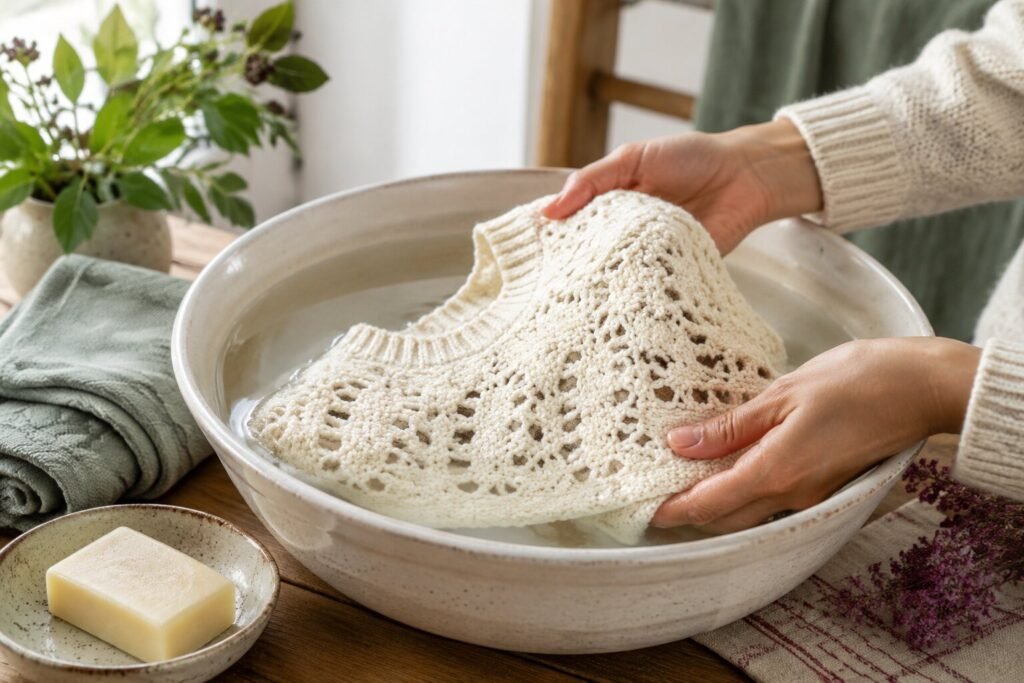
The single most common way a beautiful crochet piece is ruined is not through wear — it is through washing. A wool sweater that felts in a hot machine. A cotton blanket that develops strange hard patches from the wrong detergent. A delicate lace shawl that loses its blocking and crumples back into a shapeless heap.
None of these outcomes are inevitable. They are the result of washing crochet the same way you wash everything else — quickly, thoughtlessly, and without reading the label. This guide changes that.
Here is everything you need to know to wash every crochet piece you own correctly, safely, and with results that keep the piece looking as good as the day you first received it.
First: Reading the Care Label
Every Crochelly piece ships with a care instruction card that tells you exactly how to wash that specific item. Before doing anything else, find and read it. The care instructions exist because the fibre content of a piece determines its washing requirements completely — and what is correct for one piece may ruin another.
Care labels use standardised symbols that appear on yarn packaging and sewn-in clothing labels. Here is what the most important ones mean:
Hand Wash
Wash by hand only in cool or warm water. Never machine wash.
Machine Wash
Machine washable. Temperature shown as dots or degrees — one dot = cold, two = warm.
Do Not Wash
Dry clean only. Water will damage this fibre.
Dry Flat
Do not hang or tumble dry. Lay flat to dry to prevent stretching.
Low Heat Only
If drying applies — use low heat only. High heat will damage fibres.
When in Doubt, Hand Wash in Cold
If you have lost the care instructions and are unsure what fibre your piece is made from, the safest universal approach is a gentle hand wash in cool water with a small amount of mild soap. This method will not damage any fibre — it may not be the most efficient wash, but it will not ruin anything.
The Three Methods of Washing Crochet
Method 1: Hand Washing
Best for: Wool, merino, alpaca, cashmere, lace, delicate pieces, and anything labelled “hand wash only”
Hand washing is the safest method for every crochet piece regardless of fibre content. It gives you complete control over water temperature, agitation level, and immersion time — the three factors that determine whether a piece comes out of the wash looking better or worse than it went in.
Fill the Basin with the Correct Temperature Water
Use cool to lukewarm water — never hot. Heat is what causes wool to felt and delicate fibres to distort. For most natural fibres, water that feels comfortably warm on your wrist is the right temperature. For wool and alpaca specifically, err toward cool rather than warm.
Add a Small Amount of Gentle Detergent
Use a detergent specifically formulated for delicate fibres — Eucalan, Soak, Wool Mix, or a gentle baby shampoo. Add a small amount to the water and swirl to disperse before adding the garment. Standard laundry detergents are too harsh for most natural fibres and will strip the natural oils that keep wool and alpaca soft.
Submerge and Soak — Do Not Agitate
Place the piece in the water and gently press it down to submerge fully. Then leave it alone. Soak for 10 to 15 minutes, pressing down gently every few minutes to ensure water penetrates throughout. Do not rub, scrub, wring, or agitate — movement combined with moisture and heat is what causes felting and distortion.
Rinse Thoroughly
Drain the soapy water and refill with clean cool water at the same temperature. Press the piece gently to release the soap. Repeat until the water runs clear. Changing temperatures between the wash and rinse water can shock wool fibres and cause felting — keep the temperature consistent throughout.
Remove Excess Water Without Wringing
Lift the piece supporting its full weight — never pick it up from one corner, which will stretch it under its own water weight. Place it flat on a clean dry towel. Roll the towel up around the piece and press firmly to transfer water to the towel. Unroll and transfer the piece to a fresh dry area. Repeat with a second towel if needed for heavy pieces.
Dry Flat — Always
Lay the piece flat on a clean dry towel or blocking mat, reshape it gently to its correct dimensions, and allow it to air dry completely away from direct sunlight and heat sources. Never hang a wet crochet piece — it will stretch irreversibly under its own weight.
Method 2: Machine Washing
Best for: Superwash merino, acrylic, cotton, bamboo, and pieces explicitly labelled machine washable
Some crochet pieces can be machine washed safely — but only when the fibre content explicitly allows it and only with the correct settings. The key variables are temperature, spin speed, and cycle type. Getting any of these wrong can cause irreversible damage even to fibres that are technically machine washable.
Confirm the Piece Is Machine Washable
Check the care instructions. Machine washable options include: superwash-treated merino wool (look for the superwash symbol or explicit label), cotton and cotton blends, acrylic and acrylic blends, and bamboo. Standard merino, alpaca, cashmere, mohair, and lace-weight pieces are never machine washable — regardless of what anyone tells you.
Use a Mesh Laundry Bag
Place the crochet piece inside a zippered mesh laundry bag before putting it in the machine. This protects the piece from snagging on other items, reduces agitation, and prevents the piece from stretching and pulling during the wash cycle.
Select the Correct Cycle and Temperature
Always use the delicate or wool cycle — the gentlest cycle available on your machine. Always use cold water. Even superwash merino can felt or shrink in warm or hot water. Never use the regular or heavy duty cycle for any crochet piece under any circumstances.
Use a Suitable Detergent
Use a gentle detergent formulated for delicates or wool — Woolite, Persil Silk and Wool, or a dedicated wool wash. Use less than the recommended amount. Excess detergent leaves residue in the fibres that stiffens the fabric and is difficult to fully rinse out in a cold water cycle.
Remove Immediately and Dry Flat
Remove the piece from the machine as soon as the cycle finishes — do not leave it sitting in a damp machine. Place flat on a towel, reshape gently to correct dimensions, and air dry completely. Do not put any natural fibre crochet in the tumble dryer, even on a cool or air setting.
Method 3: Spot Cleaning
Best for: Small stains on otherwise clean pieces, frequent-wear items between full washes
Not every piece needs a full wash every time it is worn. Natural fibres — wool and alpaca especially — are naturally antimicrobial and self-cleaning to a significant degree. A piece that has been worn once or twice without a visible stain often benefits more from airing out than from washing, which causes wear over time regardless of how gently it is done.
Act Quickly on Fresh Stains
For a fresh stain, blot — never rub — with a clean damp cloth to absorb as much of the stain as possible before it sets. Work from the outside of the stain inward to prevent spreading. Never scrub — this pushes the stain deeper into the fibre and can cause pilling and damage to the surface texture.
Apply a Small Amount of Gentle Detergent
Apply a tiny amount of gentle detergent directly to the stained area using a clean cloth or your fingertip. Work it in very gently with circular motions. Allow to sit for two to three minutes before rinsing.
Rinse and Dry the Spot
Using a clean damp cloth, press and blot the treated area to rinse out the detergent. Repeat until no soap residue remains. Lay flat to dry. Once the spot is fully dry, assess whether a full wash is needed — often spot cleaning is sufficient and the piece can continue to be worn.
Fibre-by-Fibre Washing Guide
| Fibre | Hand Wash | Machine Wash | Water Temp | Tumble Dry | Special Notes |
|---|---|---|---|---|---|
| Standard Merino Wool | ✓ Yes | ✗ Never | Cool only | ✗ Never | Will felt with heat or agitation. Always dry flat. |
| Superwash Merino | ✓ Yes | ⚠ Gentle cold only | Cold only | ✗ No | More forgiving than standard wool but still requires care. |
| Alpaca | ✓ Yes | ✗ Never | Cool only | ✗ Never | Very heavy when wet — support fully or it will stretch. |
| Organic Cotton | ✓ Yes | ✓ Gentle cycle | Cool to warm | ⚠ Low heat only | Can shrink in hot water or high heat dryer. |
| Bamboo | ✓ Yes | ✓ Gentle cycle | Cool to warm | ⚠ Low heat only | May wrinkle — reshape while damp. |
| Linen | ✓ Yes | ✓ Gentle cycle | Cool to warm | ⚠ Low heat only | Softens and improves with each wash. |
| Acrylic | ✓ Yes | ✓ Gentle cycle | Cool to warm | ⚠ Low heat only | High heat will permanently distort acrylic fibres. |
| Mohair / Halo Fibres | ✓ Yes — very gently | ✗ Never | Cool only | ✗ Never | Minimal immersion time — halo can mat with prolonged soaking. |
Drying: What to Do and What Never to Do
The Crochelly Promise on Care
Every piece we make is designed and finished to last for years with correct care. We test-wash every new fibre we consider using before committing to it in a product. We include care instructions with every order because we want your piece to still be beautiful in ten years.
If you ever have a question about caring for a specific Crochelly piece that is not answered by your care card, message us directly. We will always help.
Questions About Your Specific Piece?
Every Crochelly piece comes with care instructions. Lost yours? We will send new ones.